LVI Lucca (Luca)
What3words – portable.gravel.jabs
Construction - Century AD
Capacity - 10,000
Visited March 2026
Status – A unique, engaging and successful adaptation of a Roman Arena into a civic space.
Inland from Pisa on the Serchio river, commanding the valley, is the city of Lucca (Roman Luca), the birthplace of Puccini.
The Italian Renaissance, for all its advances in art, architecture, philosophy, mathematics, engineering and literature, also seems to have involved quite a lot of fighting. In order to defend itself from such unenlightened behaviour, the old town of Lucca, and what remained of its Roman perimeter was encircled by 4 km of fortifications in the 1500s. It remains the most complete example of medieval defences in existence – 8-10m walls backed by earth banking from which project eleven gigantic bulwarks. These stand like brick armoured battleships jutting into the cleared space outside, and enabled cannon fire in every direction. Nobody actually attempted to besiege it (testimony to the deterrent principle).
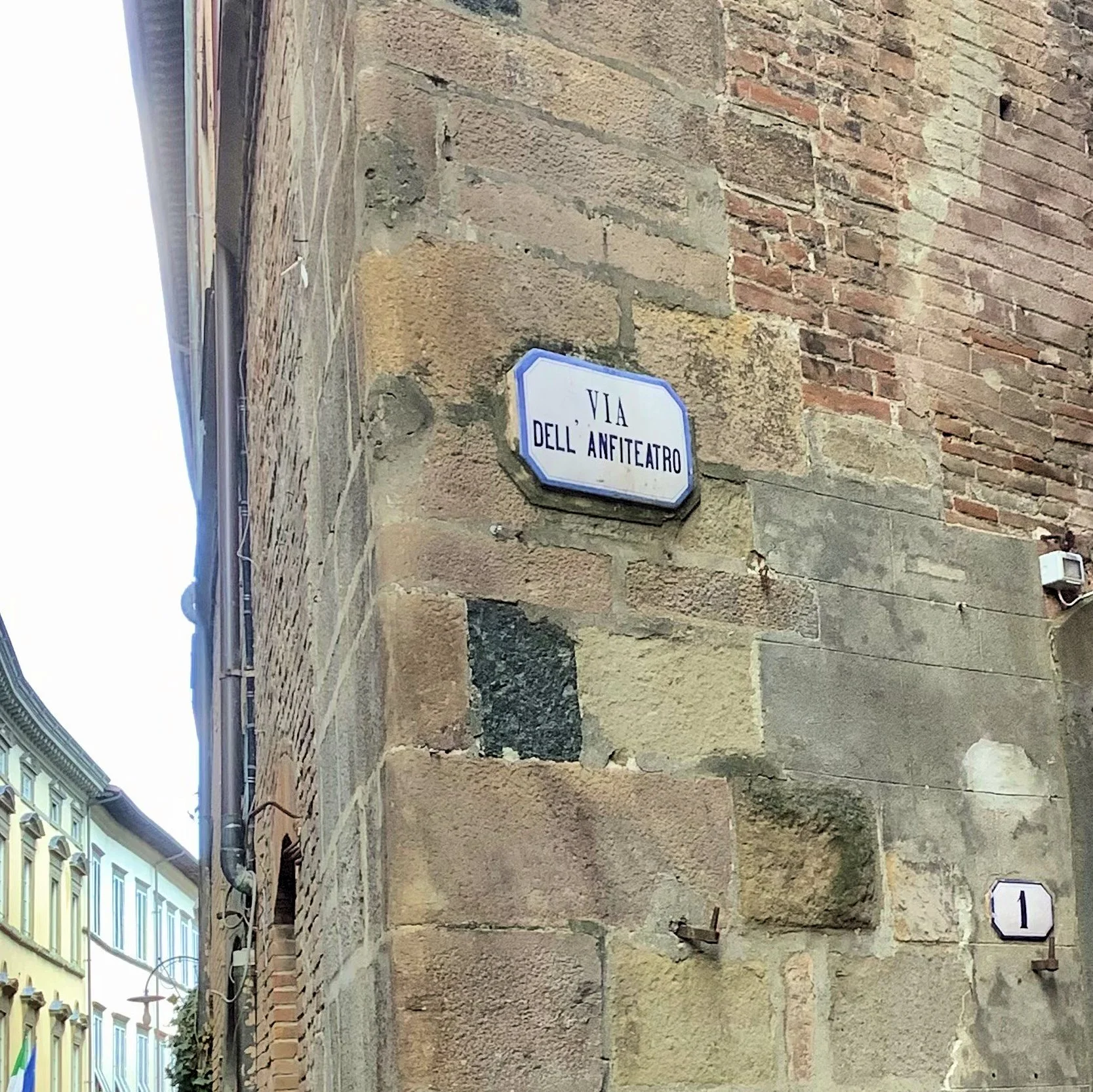
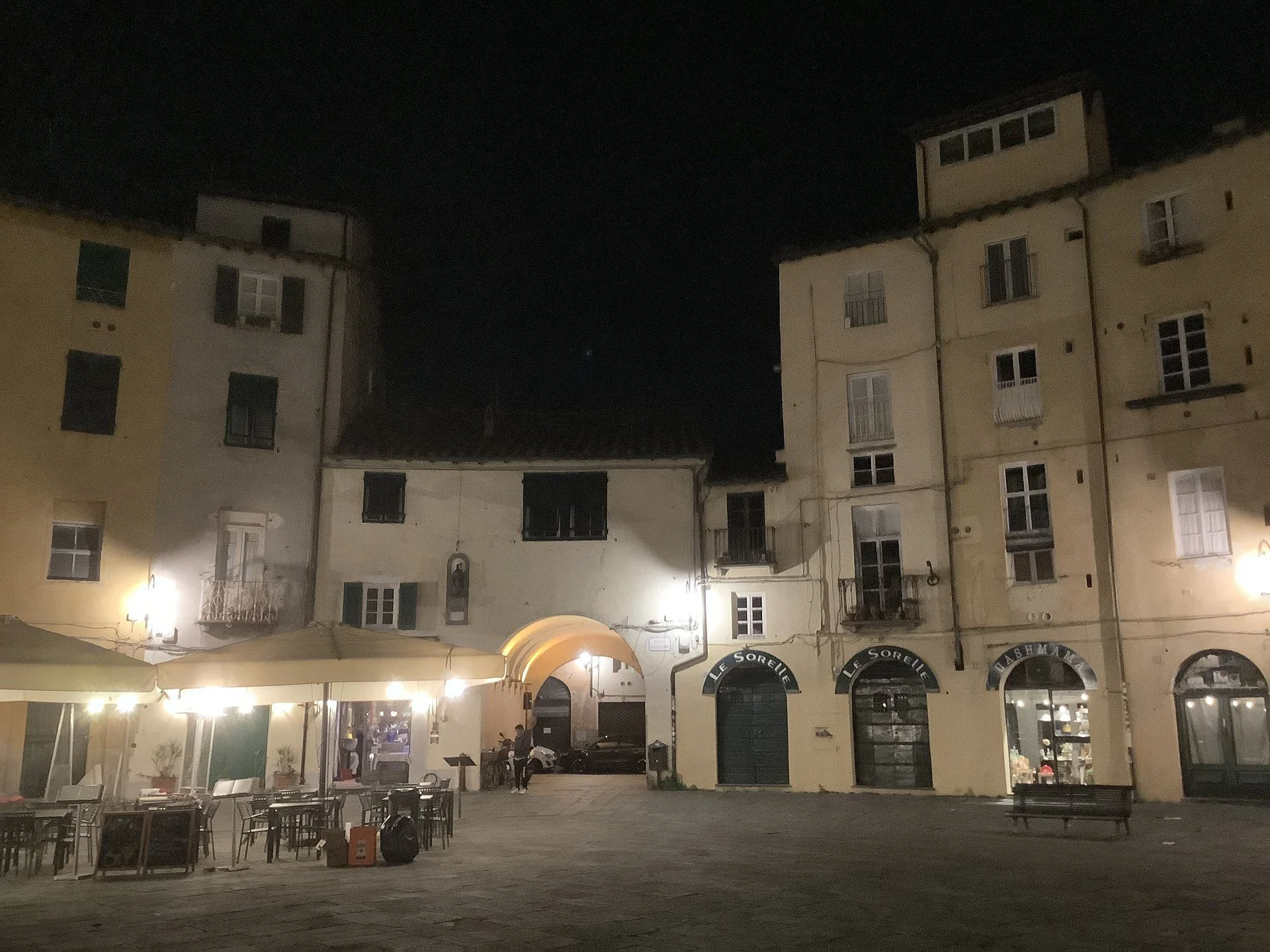
Inside the walls and in the midst of the narrow streets, the Roman Amphitheatre of Lucca is one of the most interesting and attractive adaptations you will find. The outer arcaded wall and colonnade with its marble decoration was, as in many cases, the first thing to go. Literally ripped off and re-used for church building and lime mortar. The Via Dell ’ Anfiteatro now mostly follows the path of the outer corridor. The remains of the inner wall of the corridor and the arch of the eastern entrance are incorporated into the street facades of the narrow medieval houses of varying heights constructed on and within the Roman foundations. The houses reportedly have steep narrow stairs, no lifts, and presumably in places some hefty stonework in the cellars and lower floors. Somebody in the early 19th century got the idea of clearing the houses and vegetable gardens from the centre and creating an oval market place. The marble plaque (see the video above) at the northern arched entrance reads:
“1839 - In Honour of Charles Ludwig of Bourbon. Through his provident and munificent guidance, this arena of the Roman amphitheatre was restored to its original form, and for the convenience of the citizens, the market of foodstuffs was gathered here, clearing the Piazza of San Michele for the peace of worship and for the adornment of Lucca.”
If you are inclined to some in-depth reading, seek out a 2015 paper by Susanna Caccia Gherardini of the Department of Architecture at the University of Florence entitled (In Italian) “…large and misshapen bones from notable bodies” The amphitheatre of Lucca: ruin, spontaneous reuse and restoration. It’s available via open access. She analyses, in rather wordy architectural language, how the amphitheatre today reflects choices made in response to the evolving needs of its users which ultimately transformed it into its present state of preservation. There are some good illustrations and references within.
The Piazza is a unique place – particularly first thing in the morning before the waiters in the many restaurants start touting for customers. My recommendation is walk around and enjoy the ambience then find a quieter restaurant in the back streets to try the local Zuppa Frantoiana with a glass of Sangiovese.
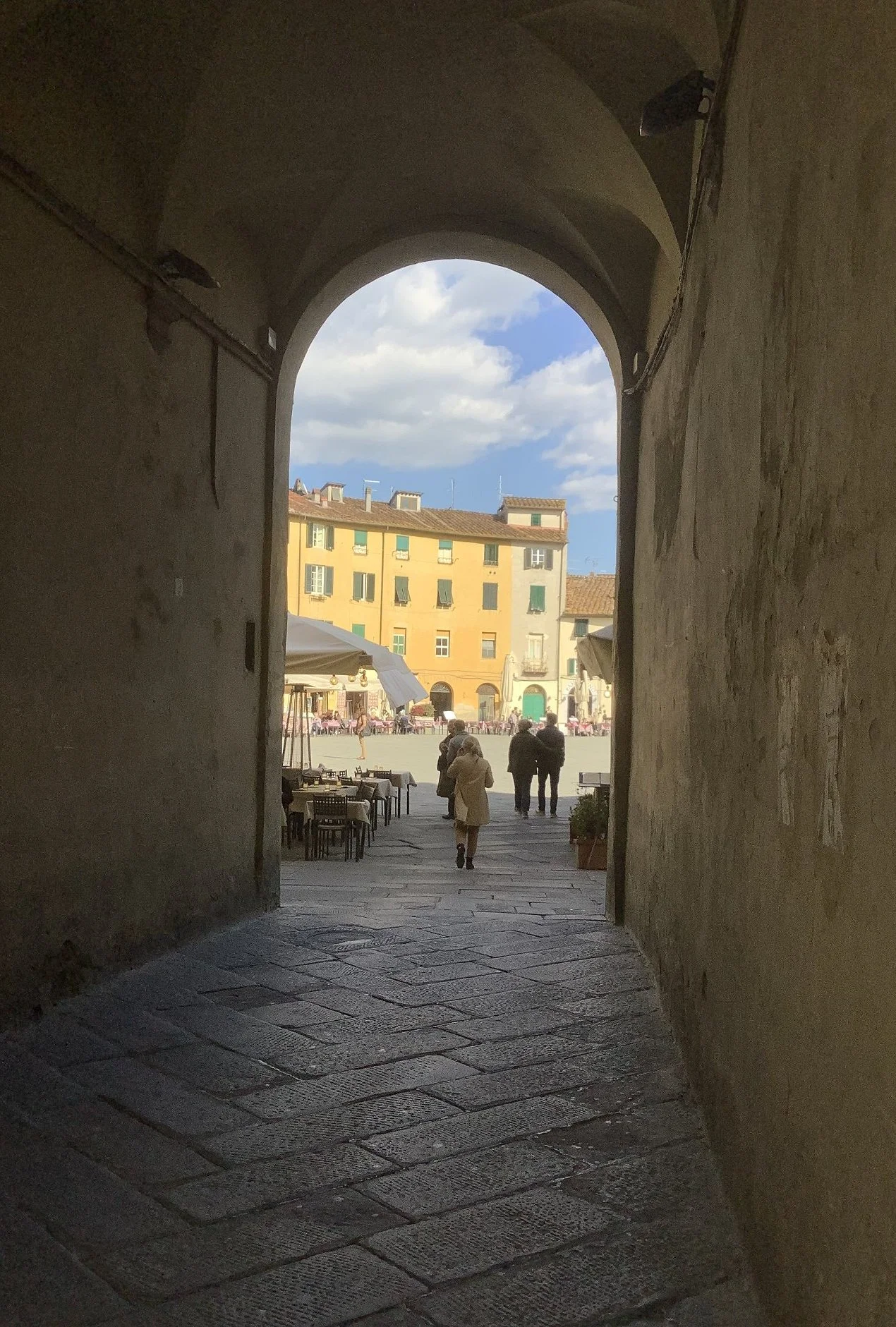
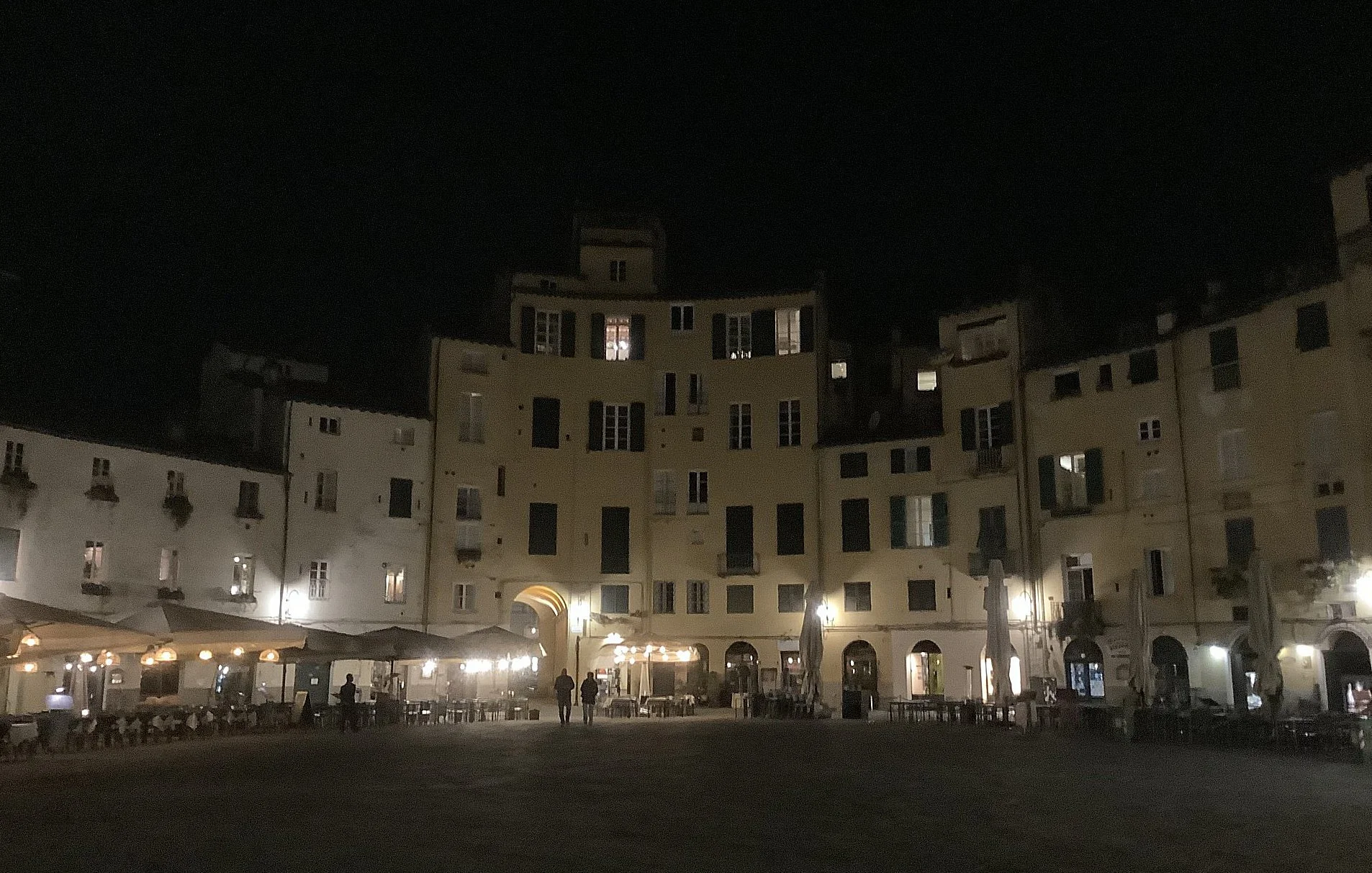
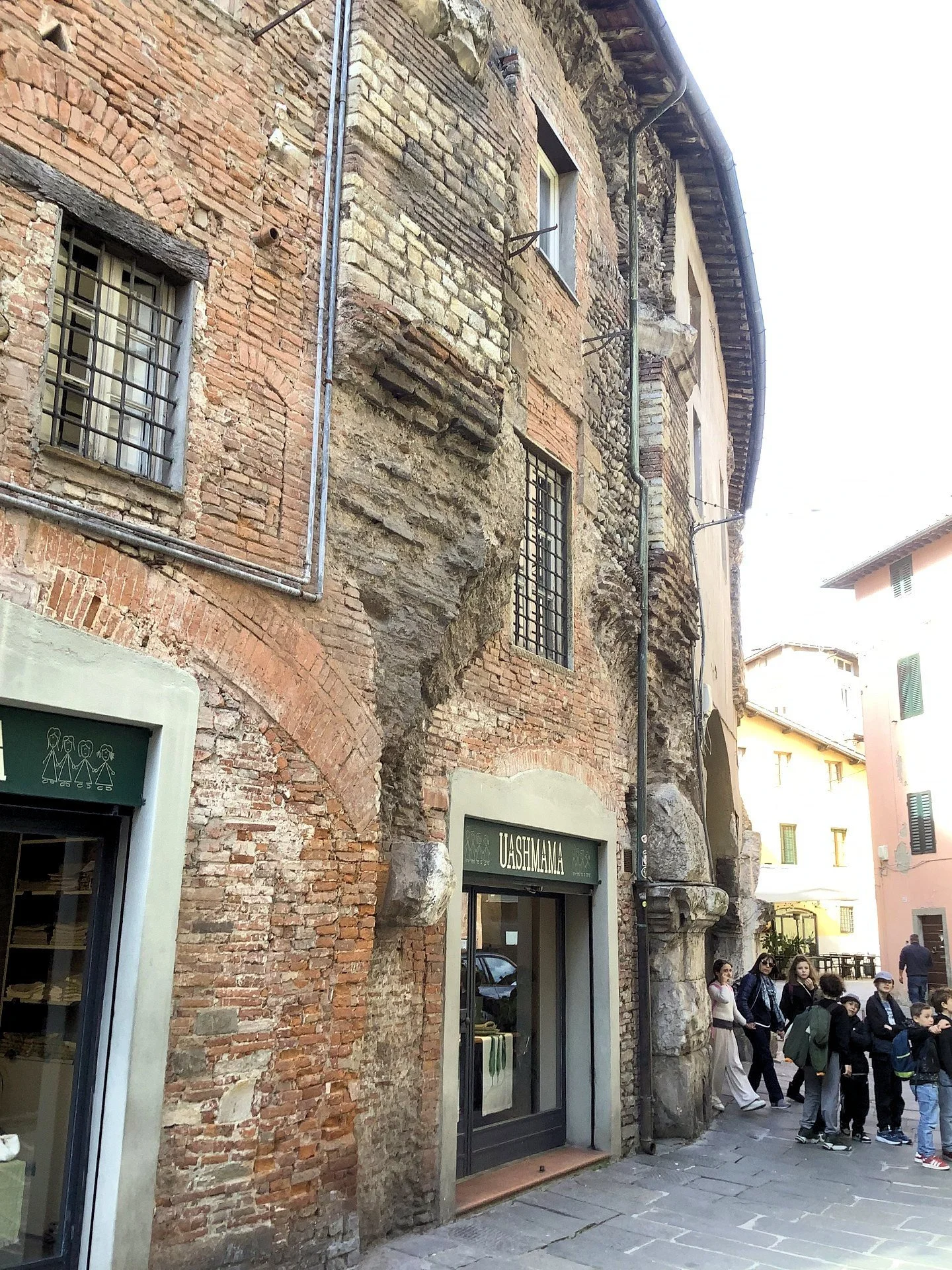
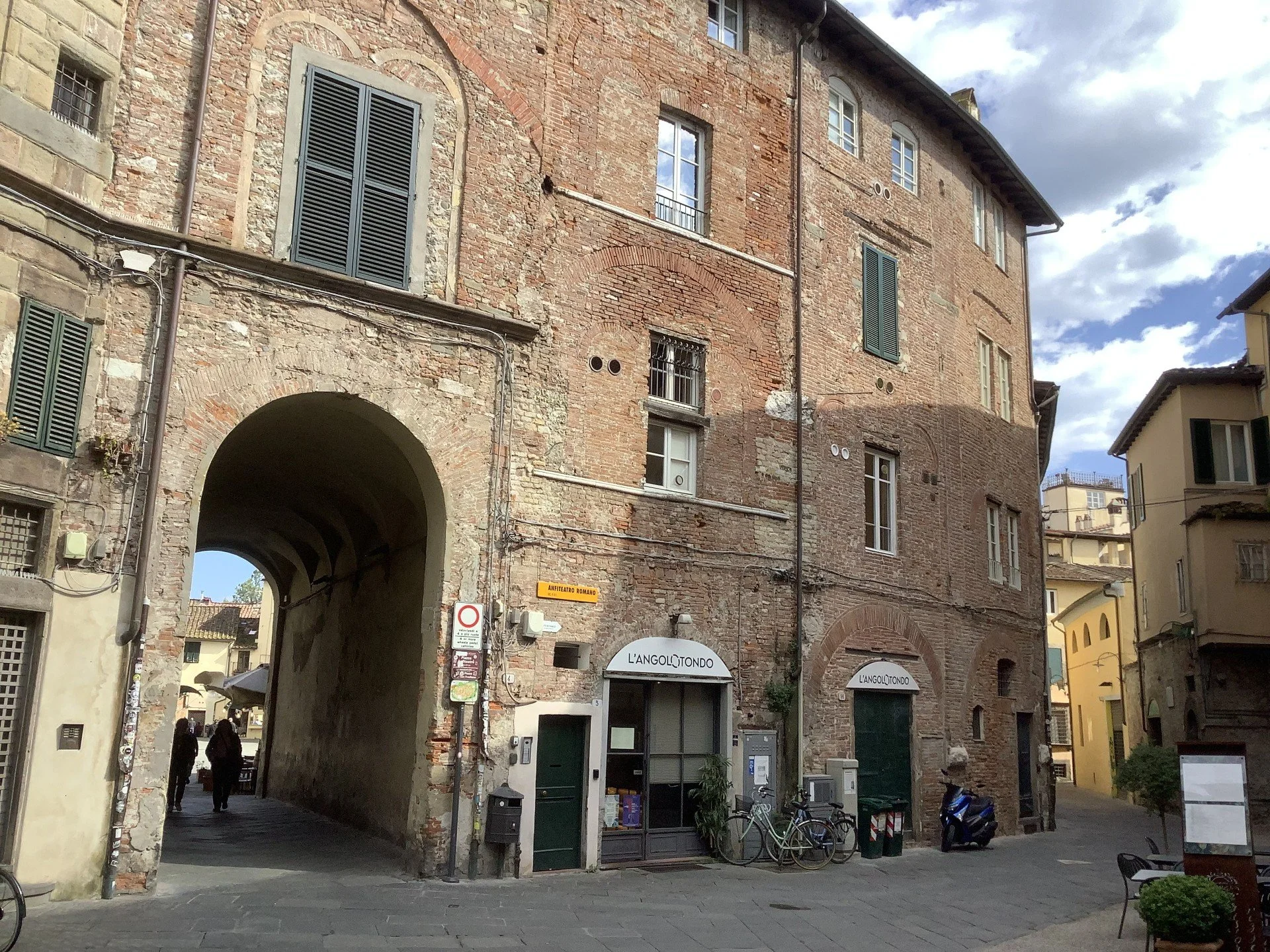
West Entrance
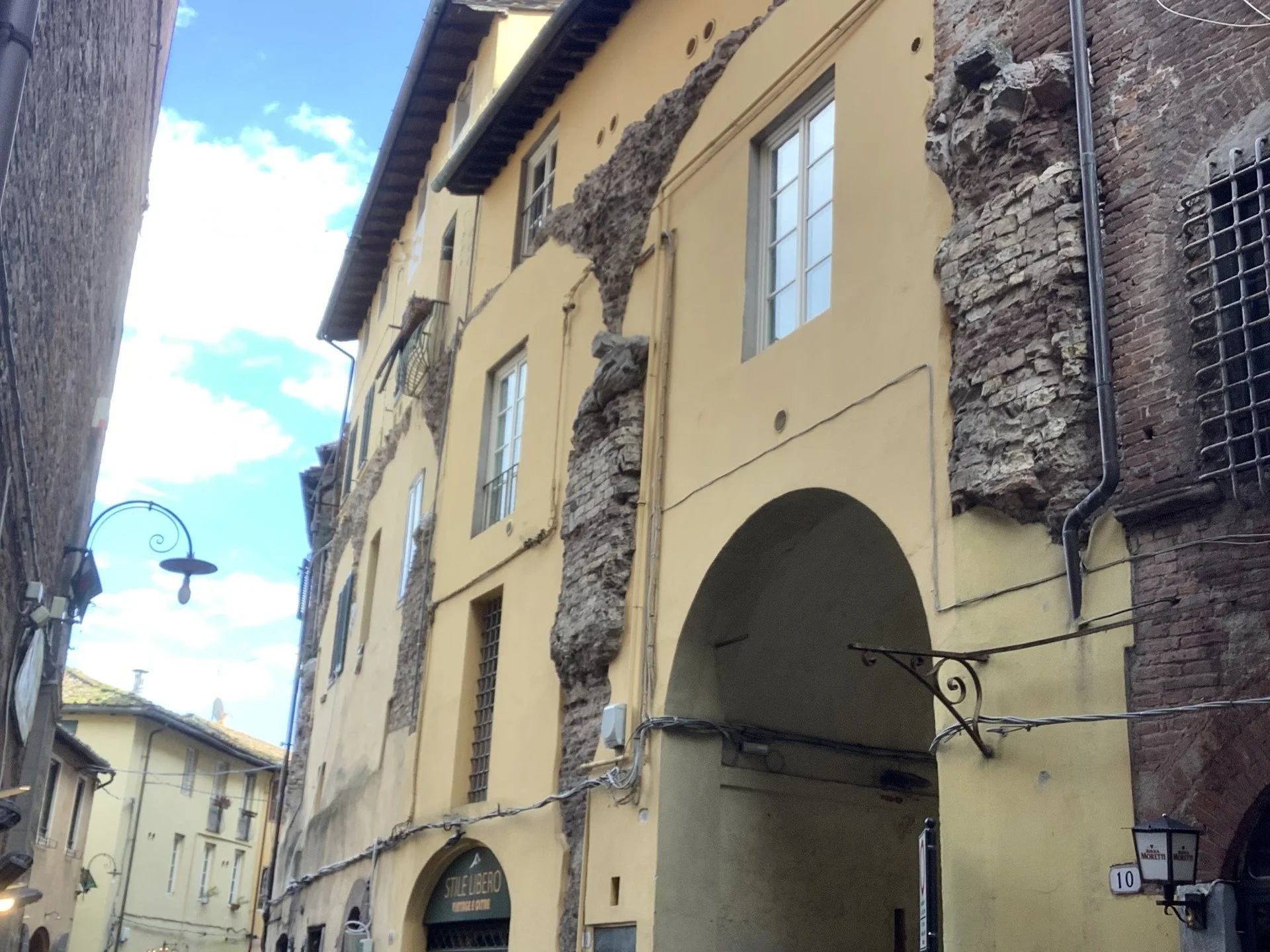
North Entrance
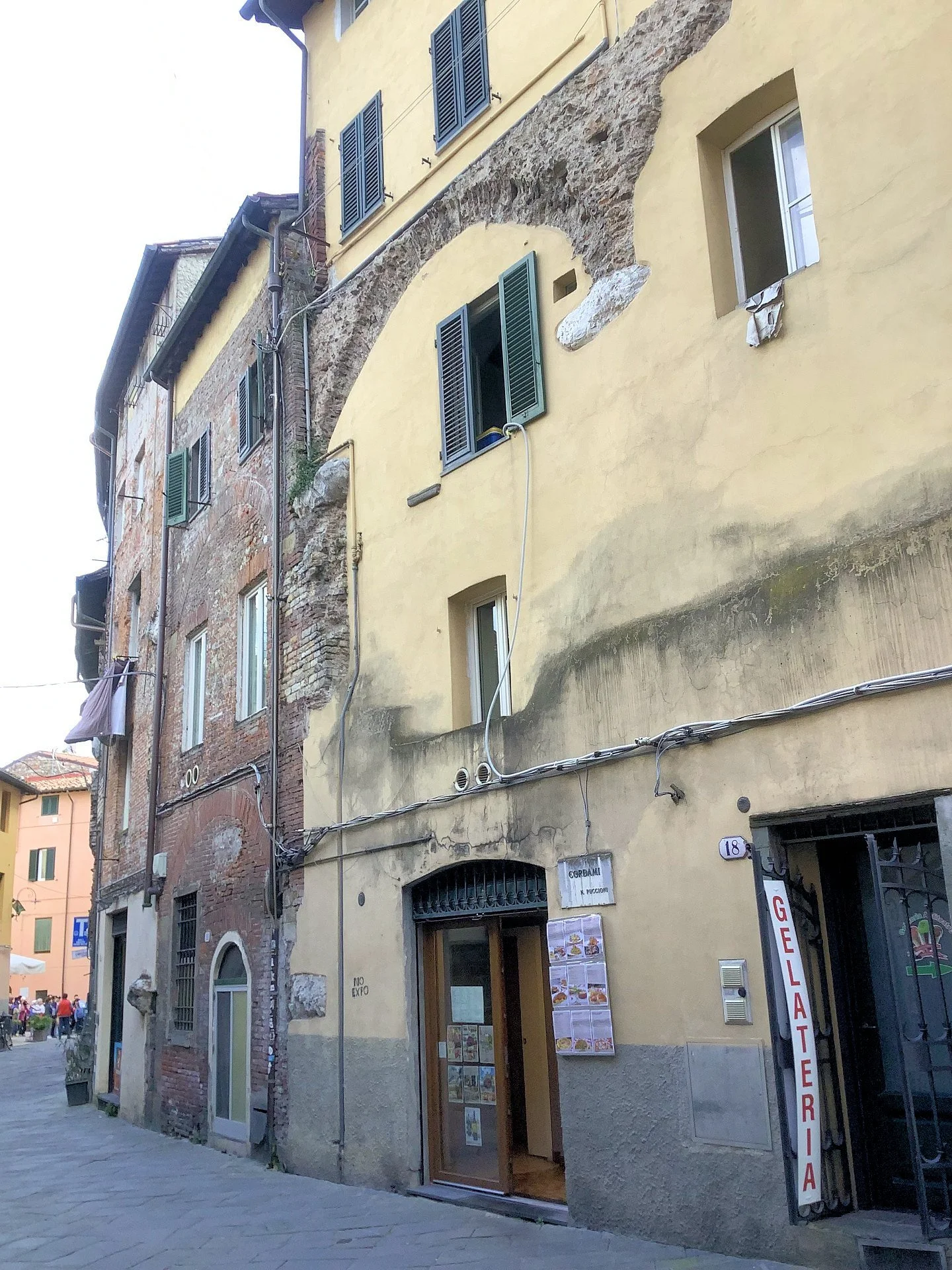
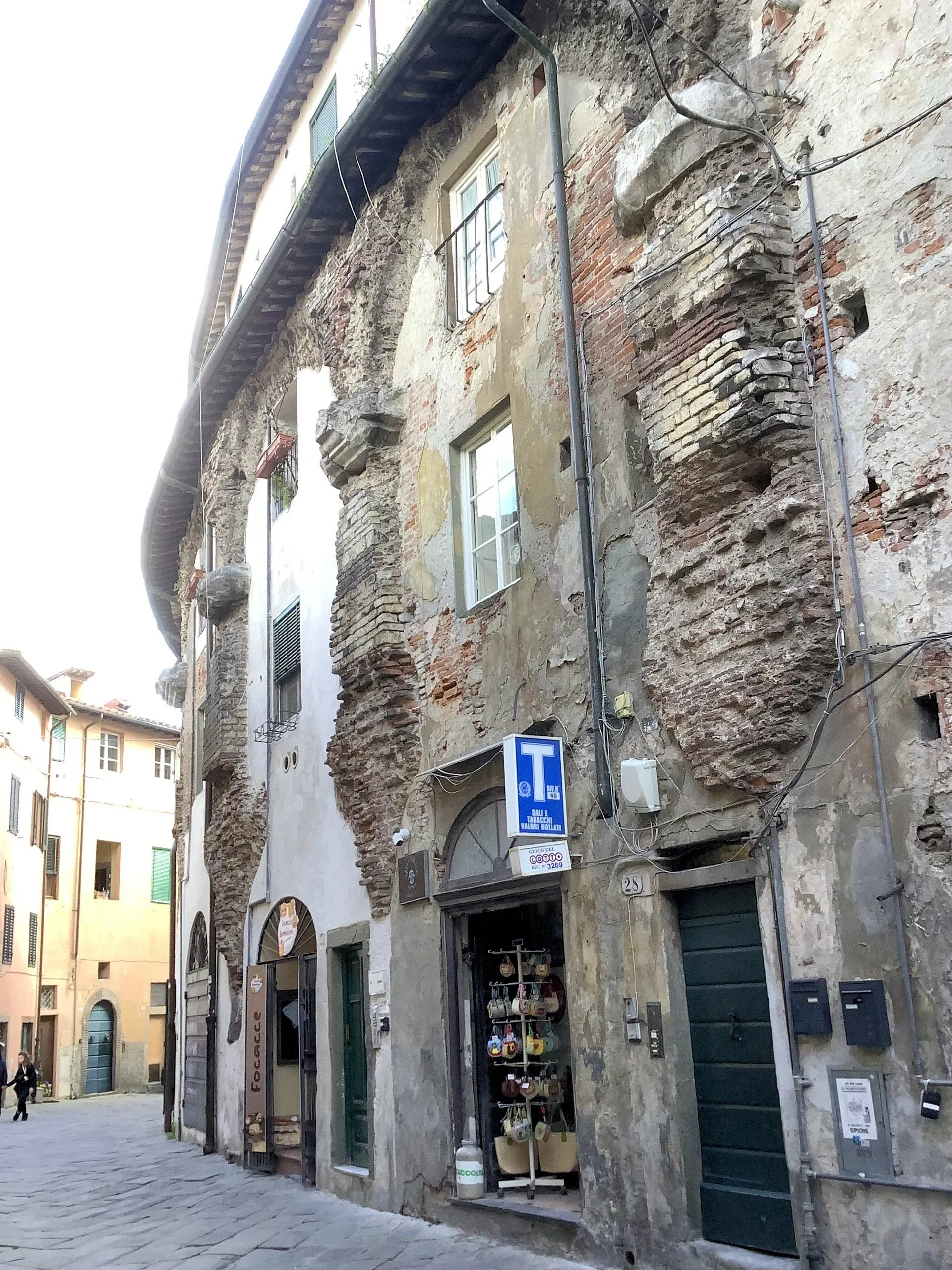
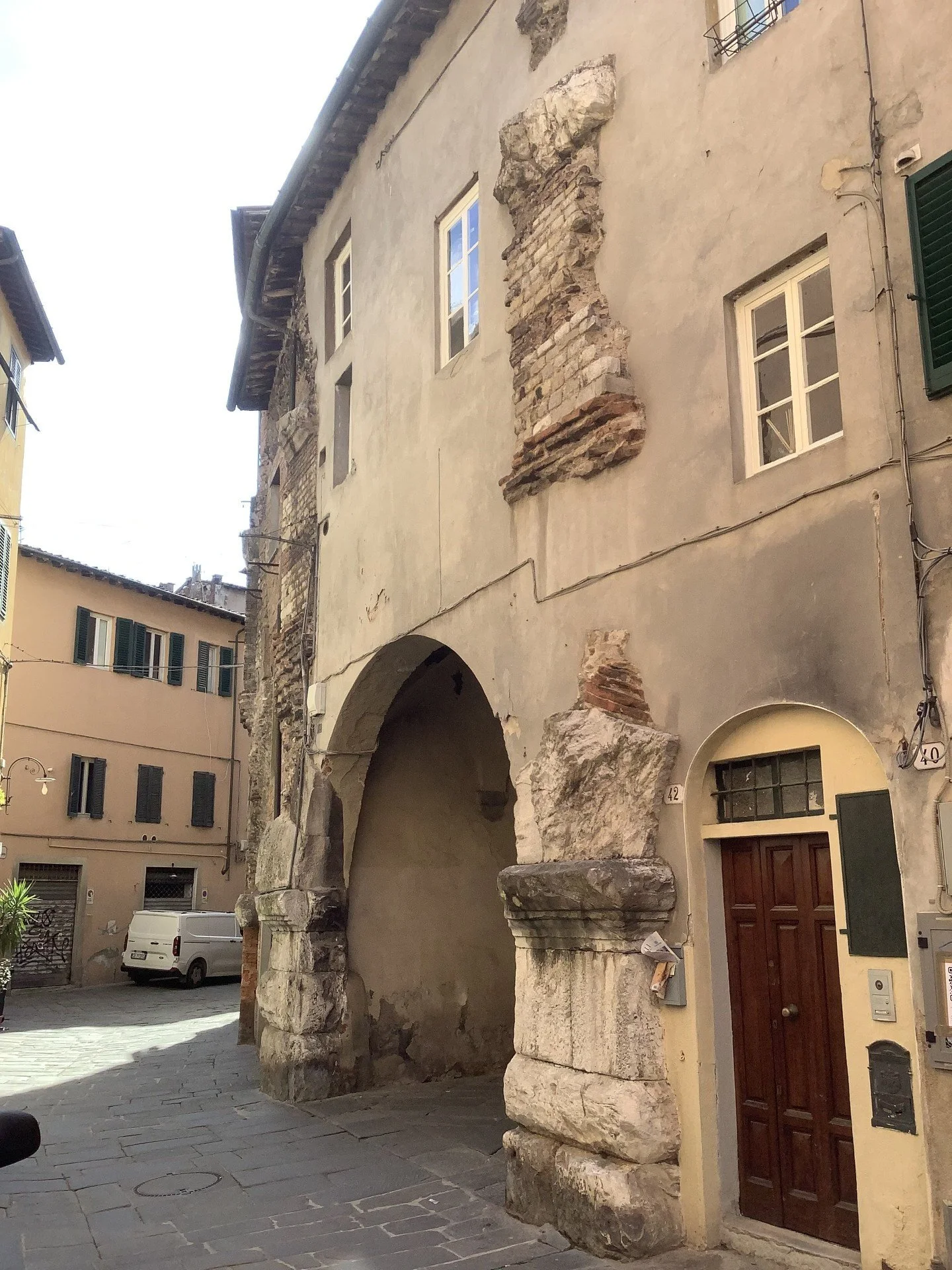
East Entrance
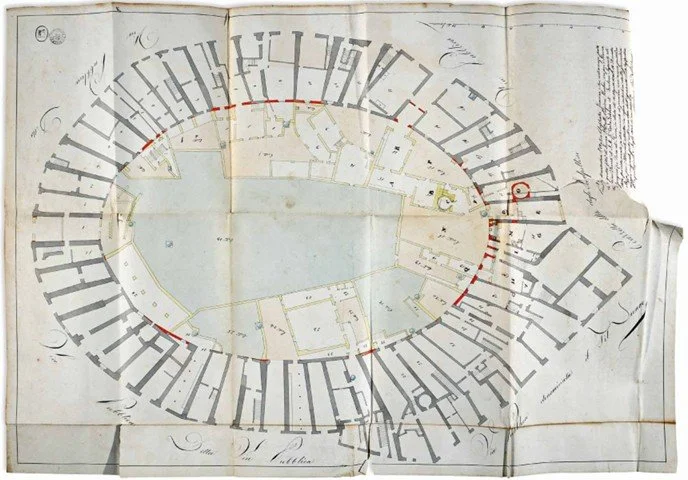
1533 Houses, Stores, Prisons and Gardens occupy the structure
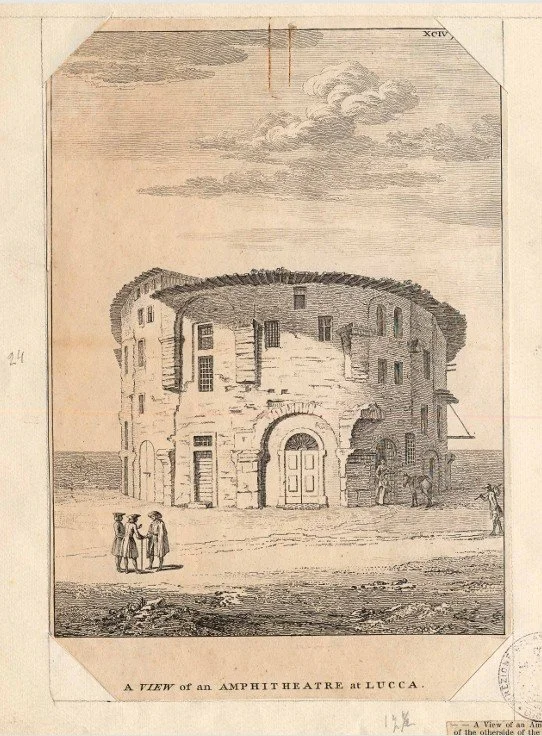
From Richard Pocock - A Description of the East 1745
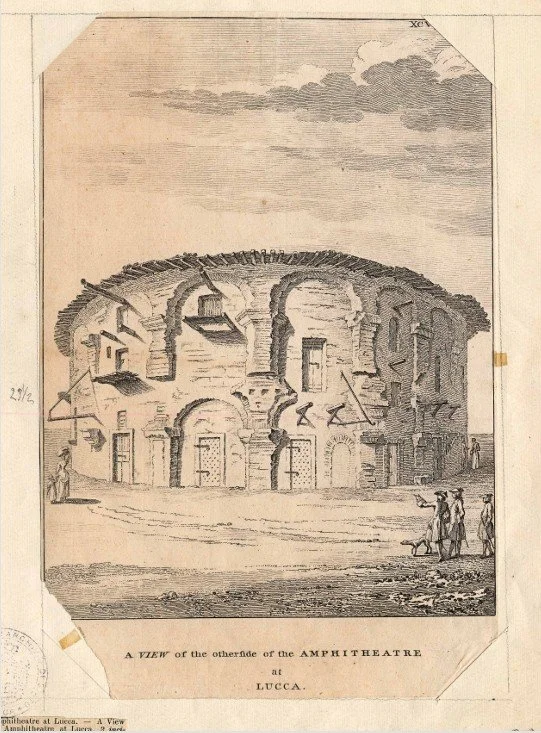
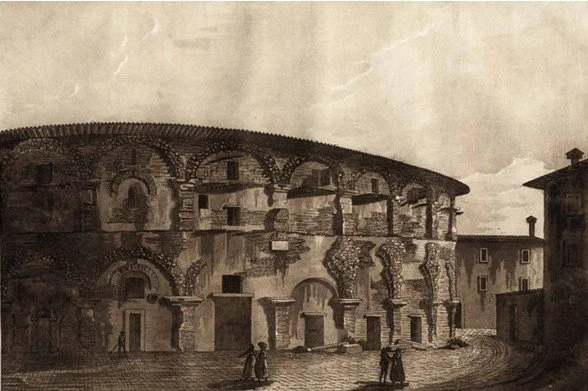
Francesco Gandini. Viaggia in Italia 1831-32