LVII Milan (Mediolanum)
What3words – maple.tweaked.ladder
Construction - 2nd-3rd Century AD
Capacity - 35,000
Visited March 2026
Status – Rescued from obscurity by an archaeologist who was Female, Jewish and who survived the Second World War. Until excavations between the 1930s and 1970s the remains were largely covered by development and a market garden. Currently a building site. Work is in progress to present the skeletal remains in a new park setting.
Alda Levi 1890-1950
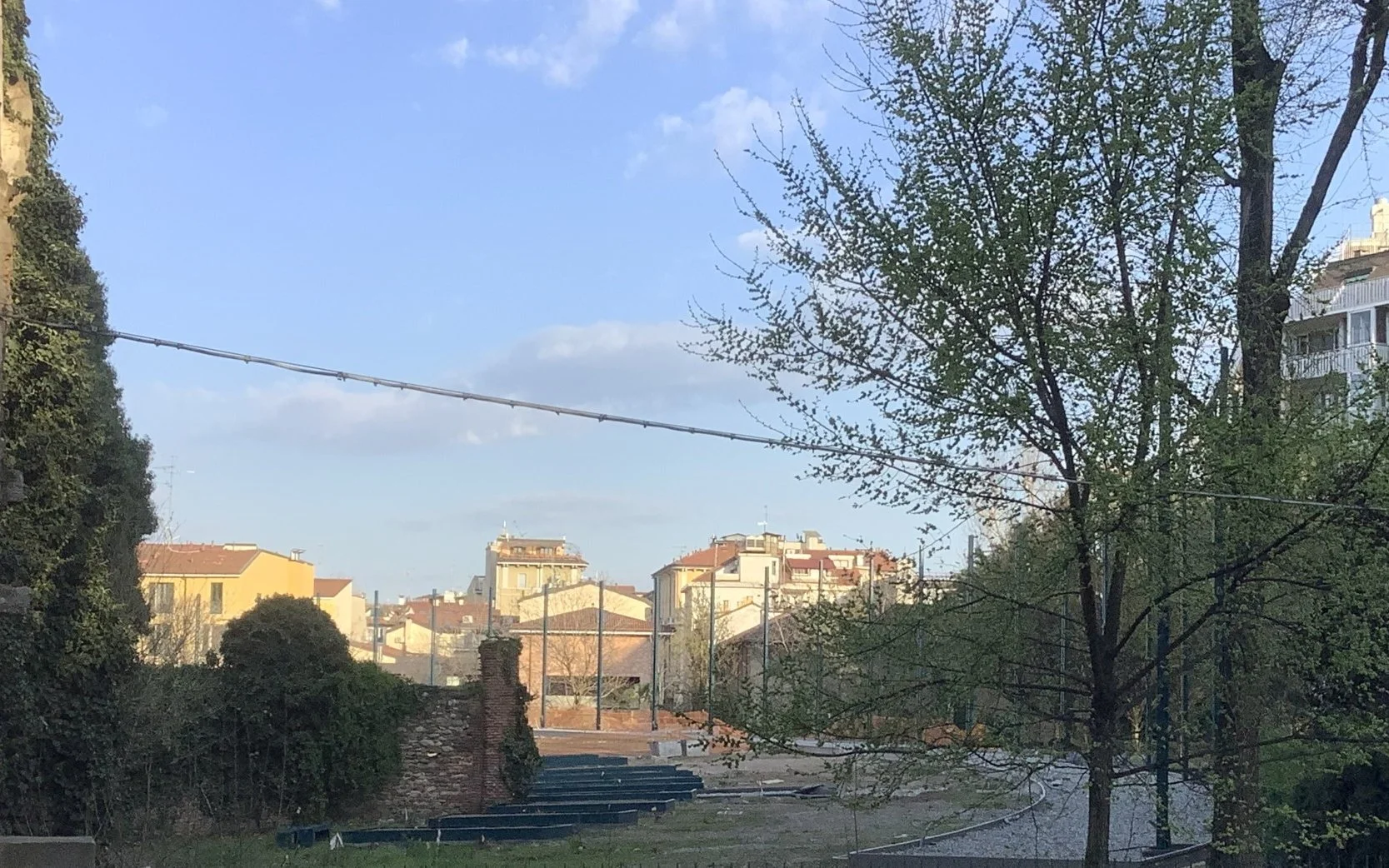
The park prior to the current project
The last stay on my March 2026 tour of northern Italy was Piacenza, from which a 40 minute train journey dropped me at the fascist architectural monster that is Milan Central Station. Lofty vaulted ceilings, huge torch-like lanterns, statues with winged helmets etc. The pride of Mussolini had delightful features such as an underground platform to facilitate deportation of ‘undesirables’, and a (closed from public view but still existing) lavishly appointed suite complete with parquet floors featuring inlaid swastikas in which Benito could receive his German mate off the private express from Berlin. You could get seriously depressed commuting into that cathedral of gloom every day.
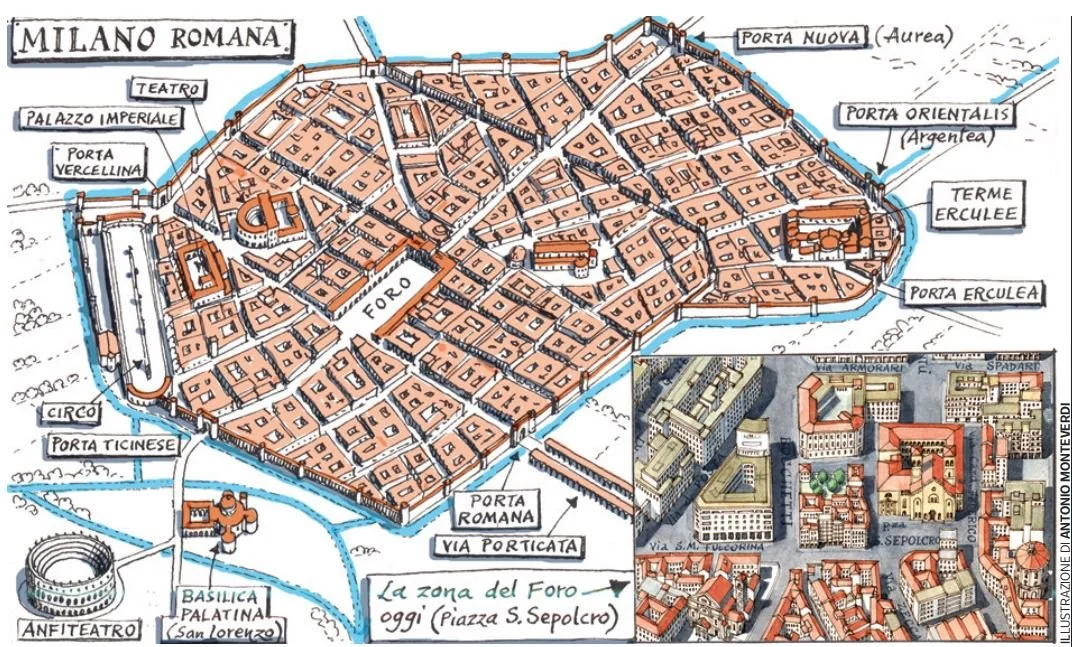
A 10 minute Metro ride takes you to the district of Conca Del Naviglio (Basin of the Navigation) near the Roman Porta Ticinese. The name reflects its history as an important part of a network of canals which once formed the city’s rapid transport system, and which linked it as an inland port with Lake Como to the north and the Adriatic to the south east.
The end of Gladiatorial games and the decline of Rome determined the future of the Milan amphitheatre for a couple of hundred years. Quarrying and church building began in the 4th Century and allegedly, barbarian incursions of the 5th century prompted wholesale demolition of the structure, which stood close to, but outside, the city walls, so that it could not become a redoubt for potential attackers.
The majority of the city’s canals were filled in and turned into roads in the 1930s. Districts with remaining sections of waterway have now become desirable residential areas. In the south of the city lies a basin where two remaining major canals converge. From this, a northern spur followed the line of the present day Via Conca Del Naviglio towards the city centre. Beside it the park ‘Giardino Attilo Rossi’ contains a surviving small section of canal.
Rather than following a straight course, the spur, like the present day street, kinks markedly to the west. This took it around the important ‘quarry’ (the Roman Amphitheatre of Mediolanum) and facilitated the collection and onward transport of stone scavenged from its remains to sites such as the 13th Century Basilica of S.Lorenzo Maggiore, which stands on foundations of re-purposed Roman stone.
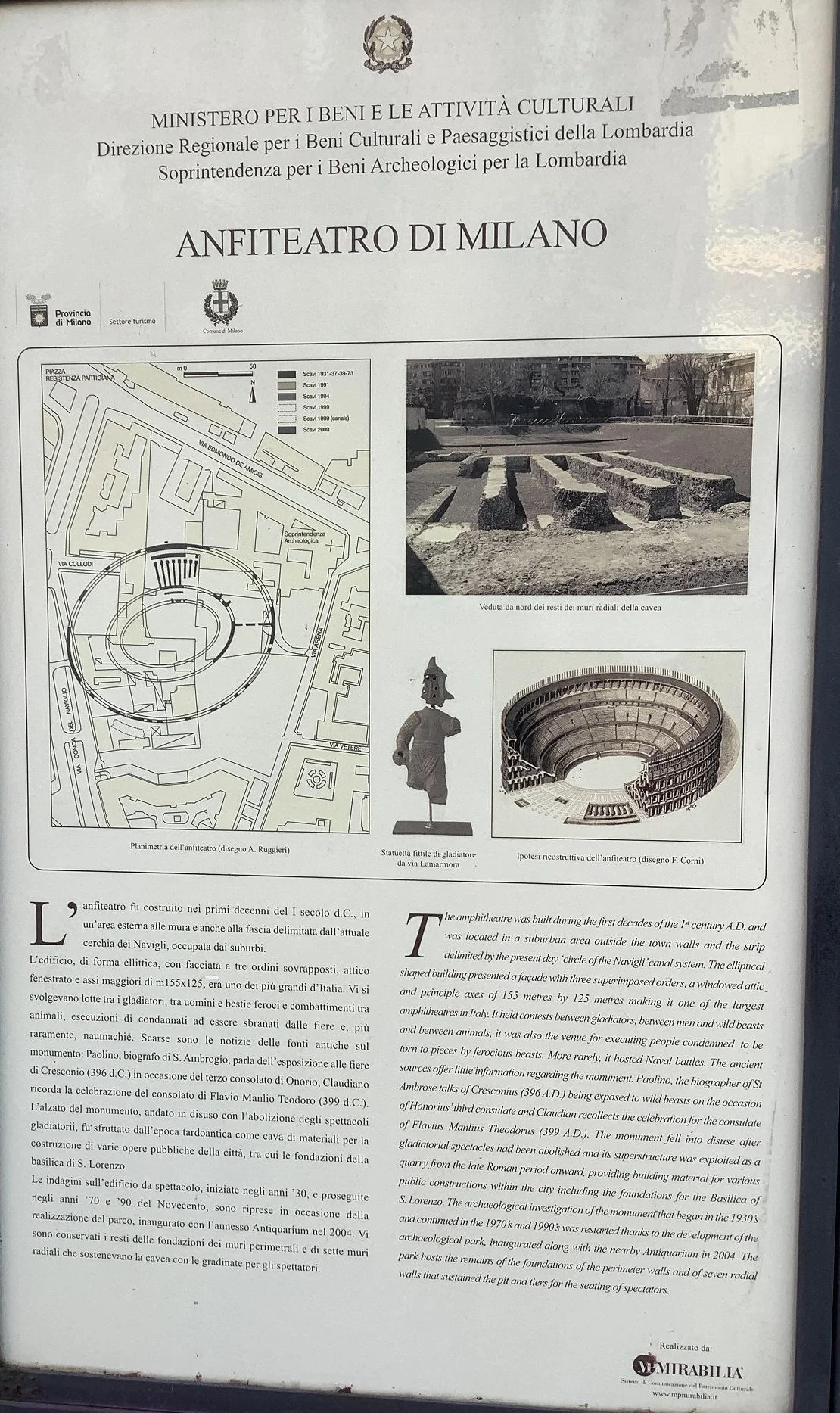
The amphitheatre was one of the largest in the empire, estimated to have had seating for 35,000 and reportedly accommodated on occasions ‘naval battles’ in its flooded arena.
Largely covered with buildings and gardens by the 20th Century, fragments of its remaining structure were uncovered as part of the work of archaeologist Alda Levi (1890-1950) who started in 1936. These ended up in a small area of park named after her. A surname like Levi, the Italian Racial Laws of 1938, and an anti-fascist Husband were the sort of things that got innocent people a mystery trip from the secret platform at Milan Central. Alda lost her job but not her life, and the couple moved to Rome fearing deportation. She was reinstated as Inspector of Archaeology for the Lombardy Region in 1945.
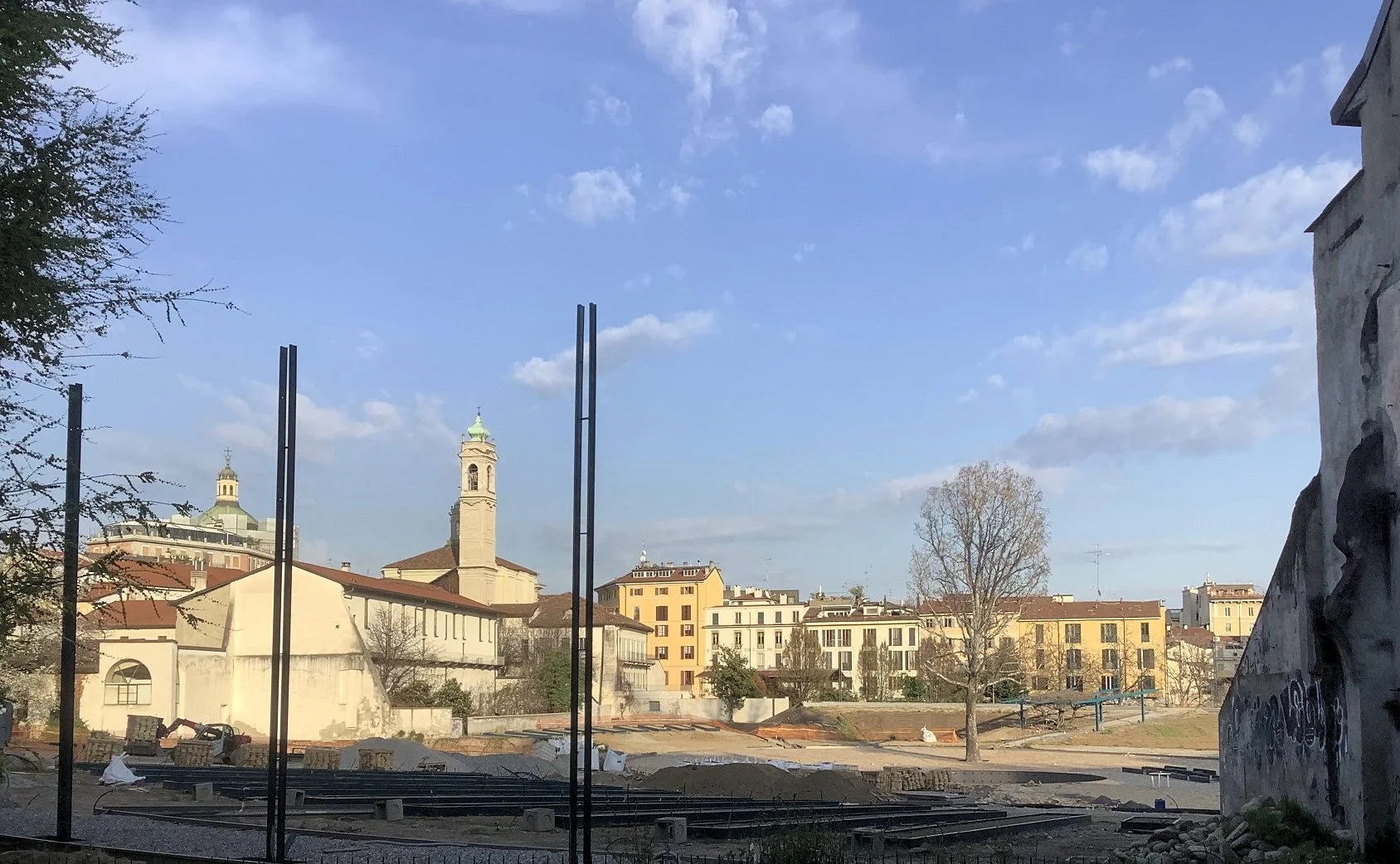
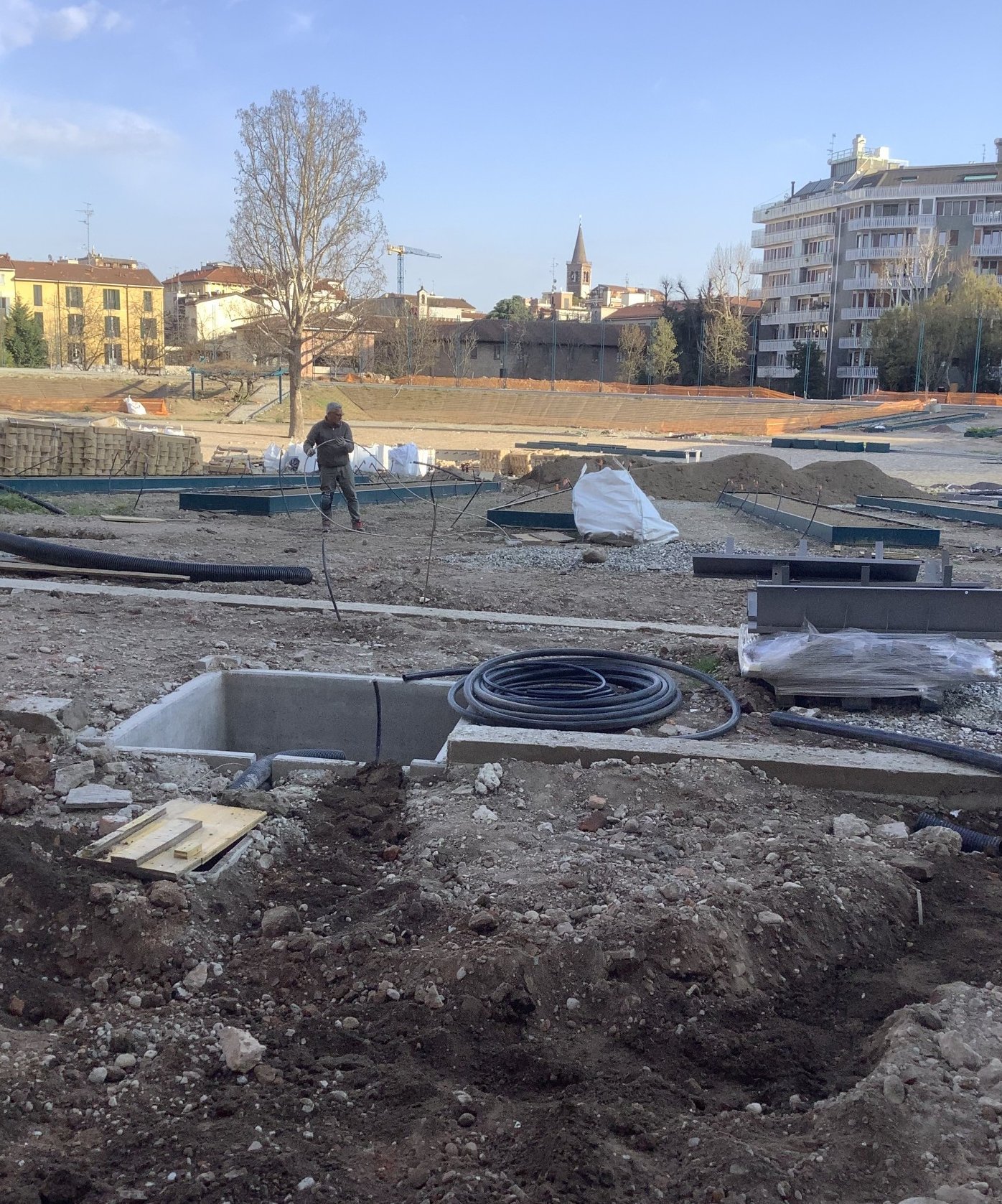
A new presentation and interpretation of the Amphitheatre within an extended public park was announced in 2022 at a cost of €1.5 million, with a completion date of 2025. This was in part facilitated by the acquisition of a hectare of land comprising a tract of abandoned and overgrown garden and the site of the Riva market garden/plant nursery, which together covered about half of the amphitheatre site. Italy being Italy and Covid being Covid, by March 2026 the arena was still a building site, surrounded by security fencing to stop you looking in, but work was definitely taking place. The only available views currently require you to climb on a tree stump in the grassed section of Via Conca Del Naviglio (…audentes Fortuna iuvat ) or peer through gaps in the plastic sheeting covering the gates at the end of Via Collodi…….we wait!
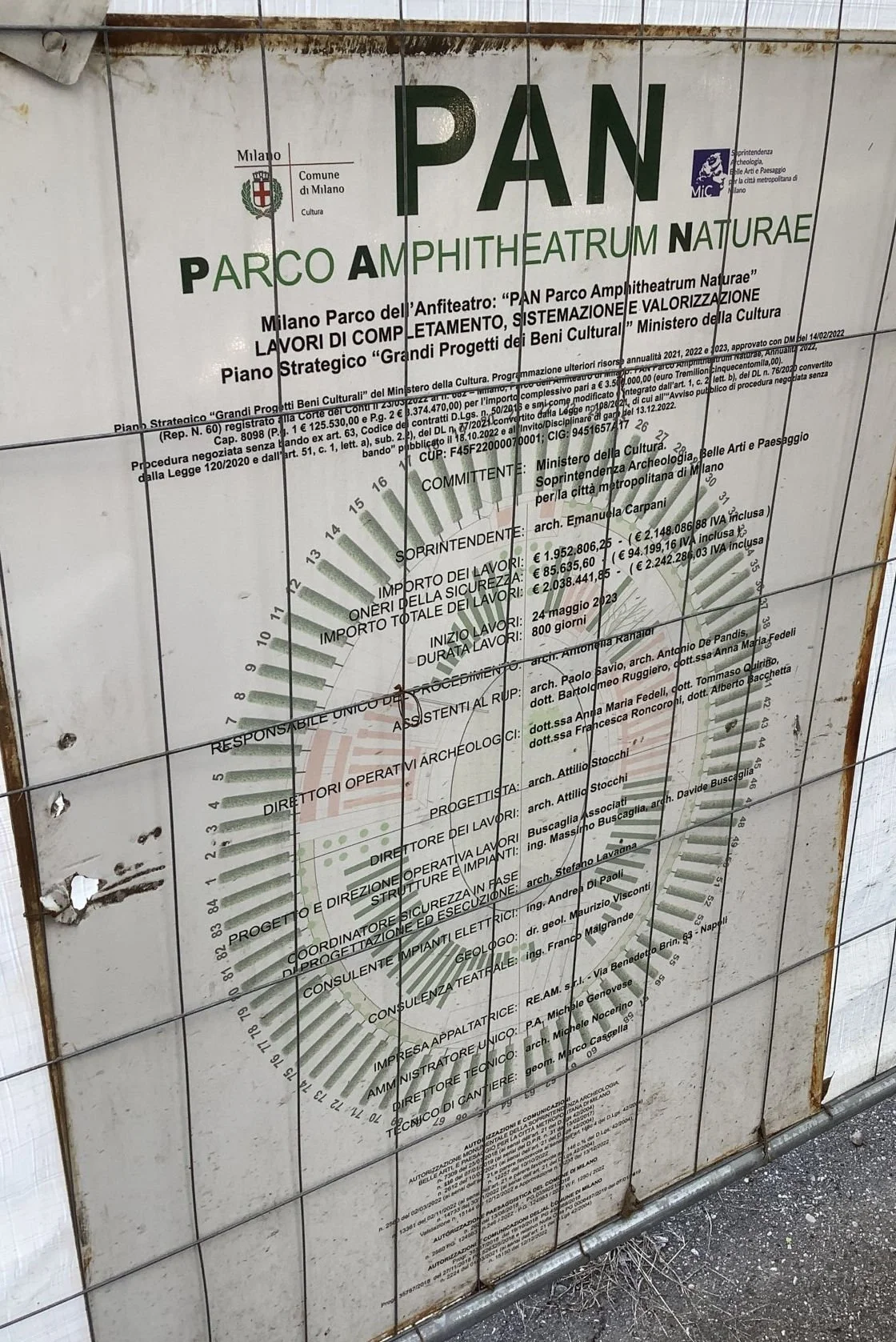
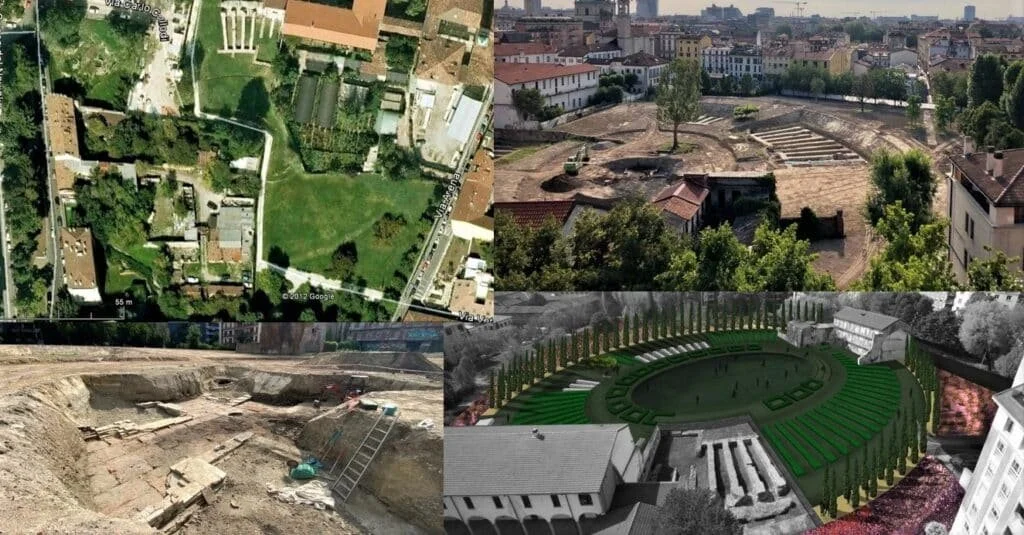
Top left shows the site before acquisition of land to expand the park.