This was the first Roman amphitheatre I ever visited. On a school trip. Road realignment has since pushed the traffic back from its walls, and areas of pedestrian friendly cobbled piazza have replaced some of the hectares of tarmac. At that time the Colosseum functioned as the fulcrum of a massive bend in a major urban highway and getting in required a dance of death across a 50m pedestrian crossing involving between 6 and 10 lines of fast moving Fiat 500s and Alfasuds.
It’s right at the epicentre of the empire, the biggest and most famous amphitheatre in the world, and I suspect, for a significant proportion of humanity the only one they know to exist. The same people probably think it’s still in use for fights to the death and feeding Christians to lions.
The colosseum is a cultural icon. We name our entertainment venues after it and buy desktop souvenir models of it in the same sort of numbers as the Eiffel Tower or the Empire State Building. It’s mightily impressive from the outside but for me the inside seemed a bit messy. A bit decrepit and skeletal, no seats (the church and palazzo builders nicked the marble first) or arena floor. I’m sure it’s been tidied up a bit in the last 50 years.
The most astonishing thing is how much of it has survived given its location. Nearly two thousand years as a centrally located source of limestone and cut marble probably means it provided materials for many of the churches in the capital (and there are lots) as well as for a marble bathroom or two hundred. There is lots of information on the people, projects and popes who contributed to its plunder and repair over the years. A good starting point is the website Piazza del Colosseo (romeartlover.it)
It’s Only Rock & Roll
The Byrds
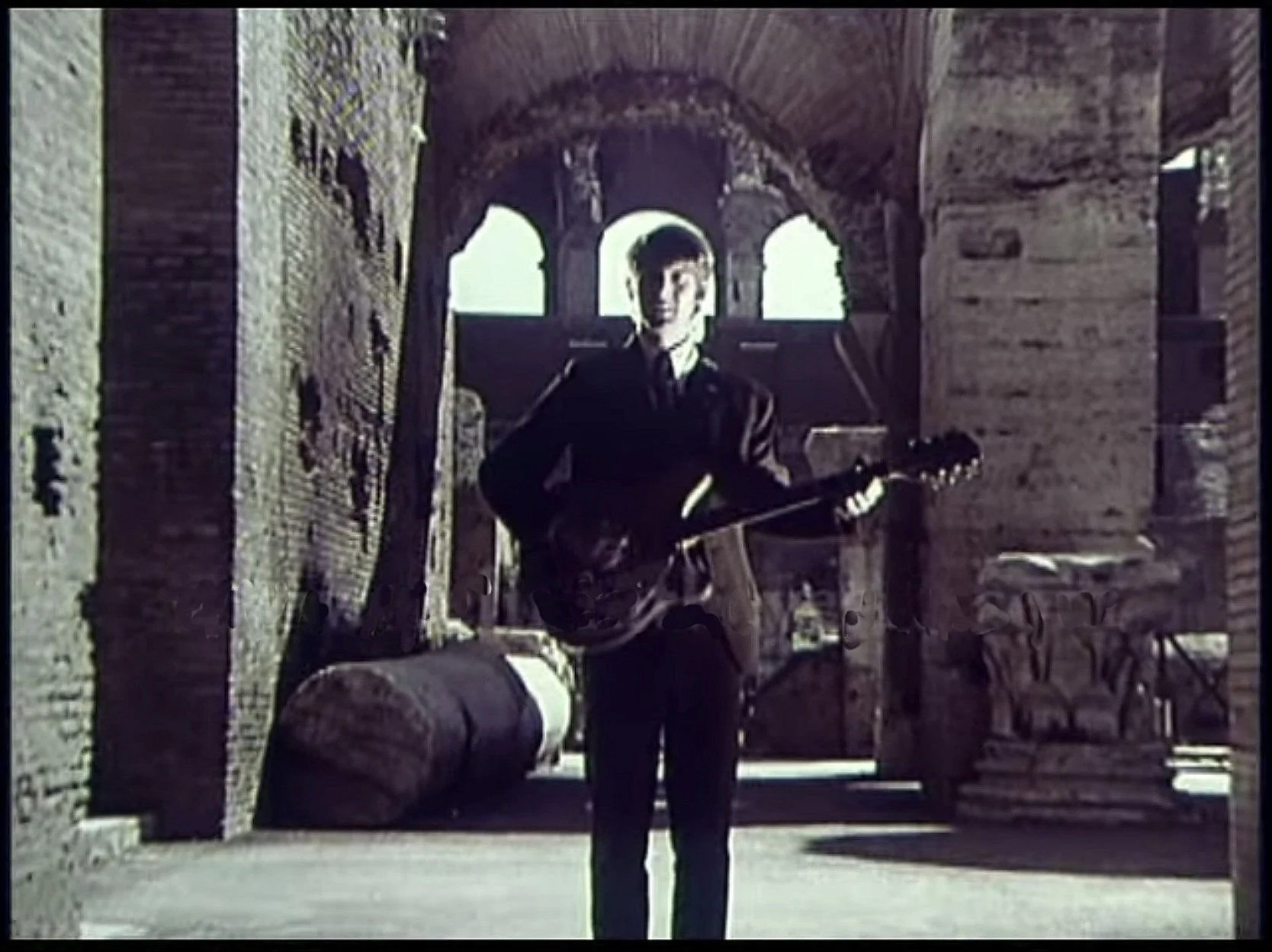
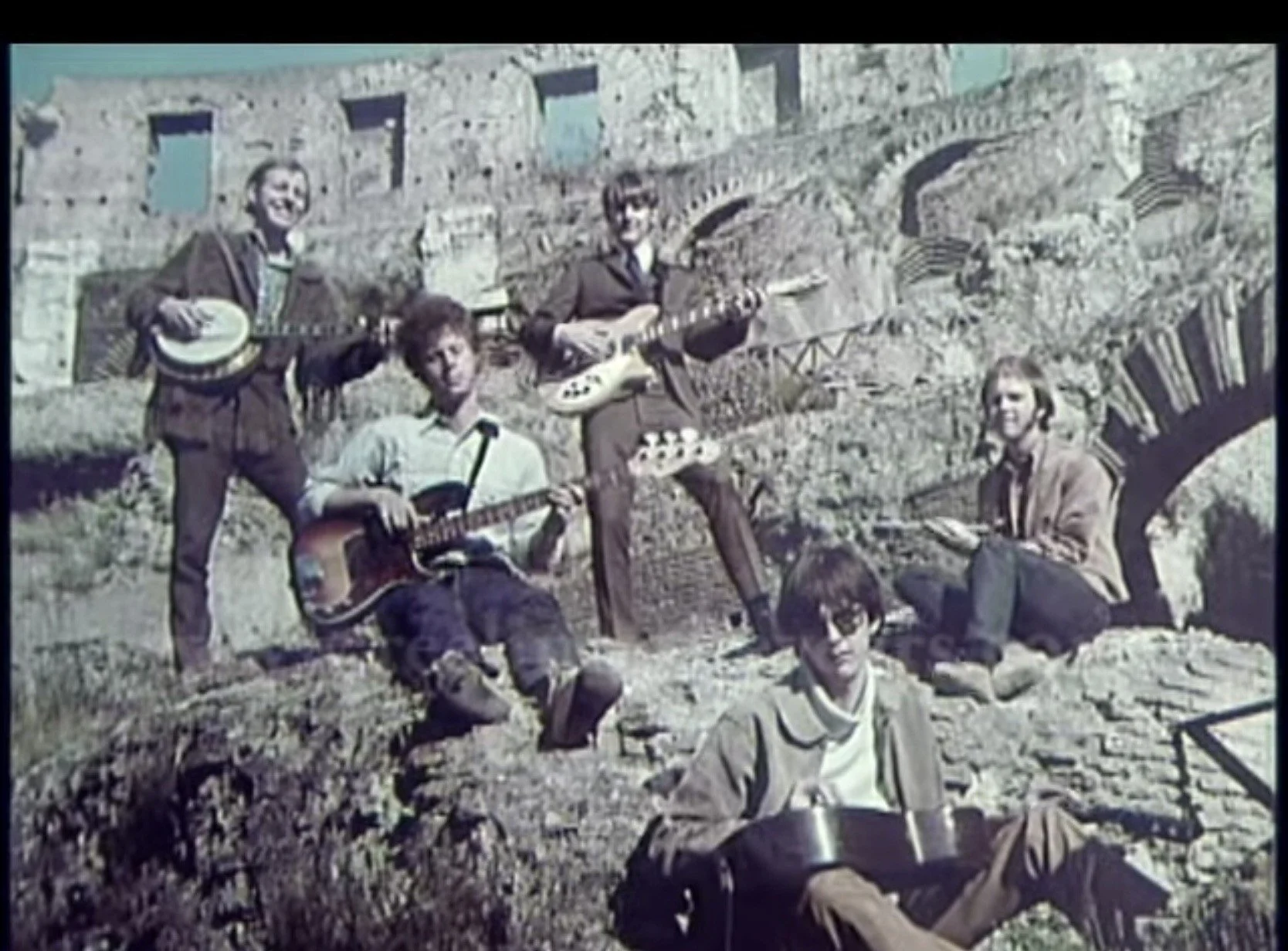
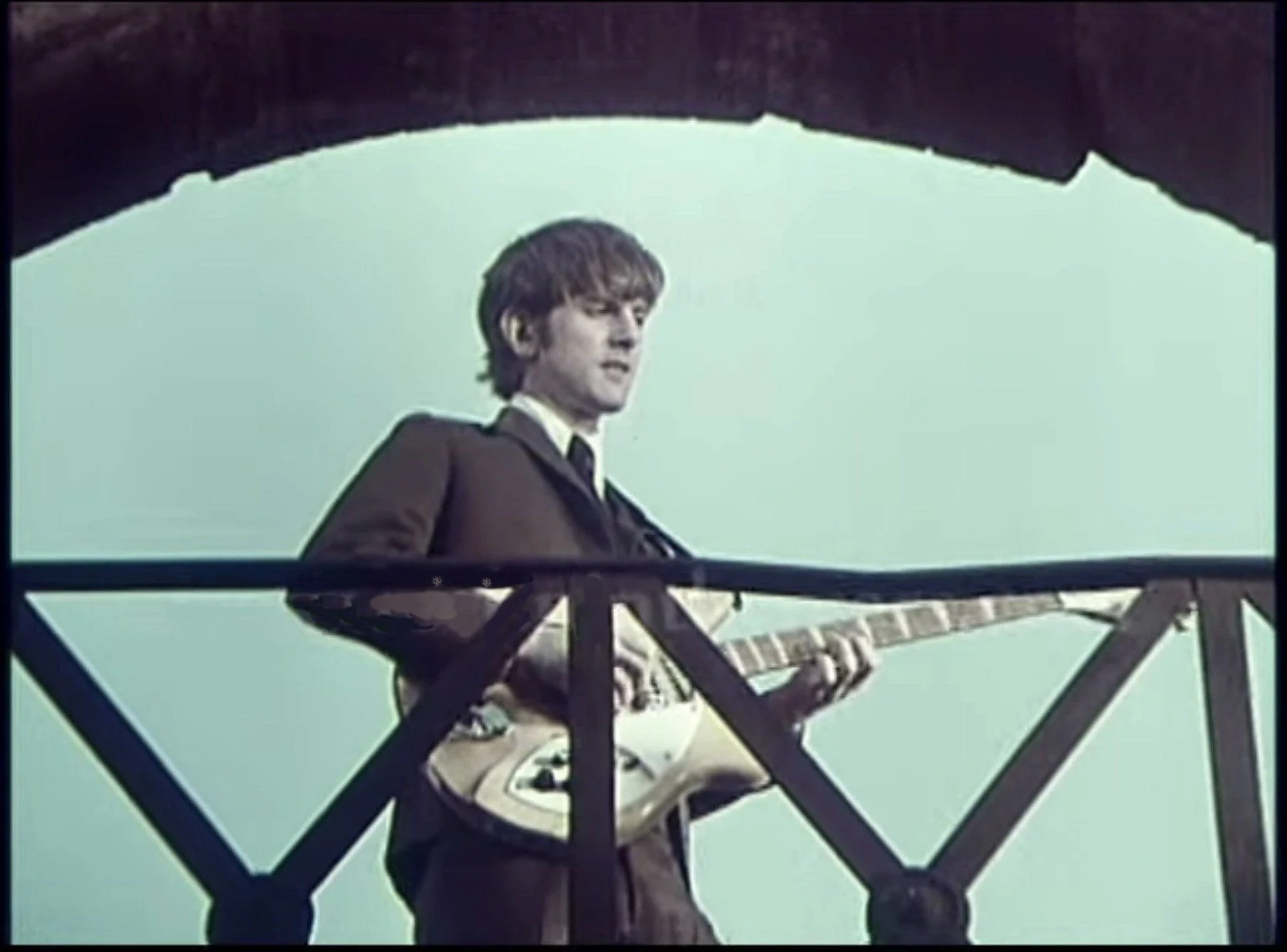
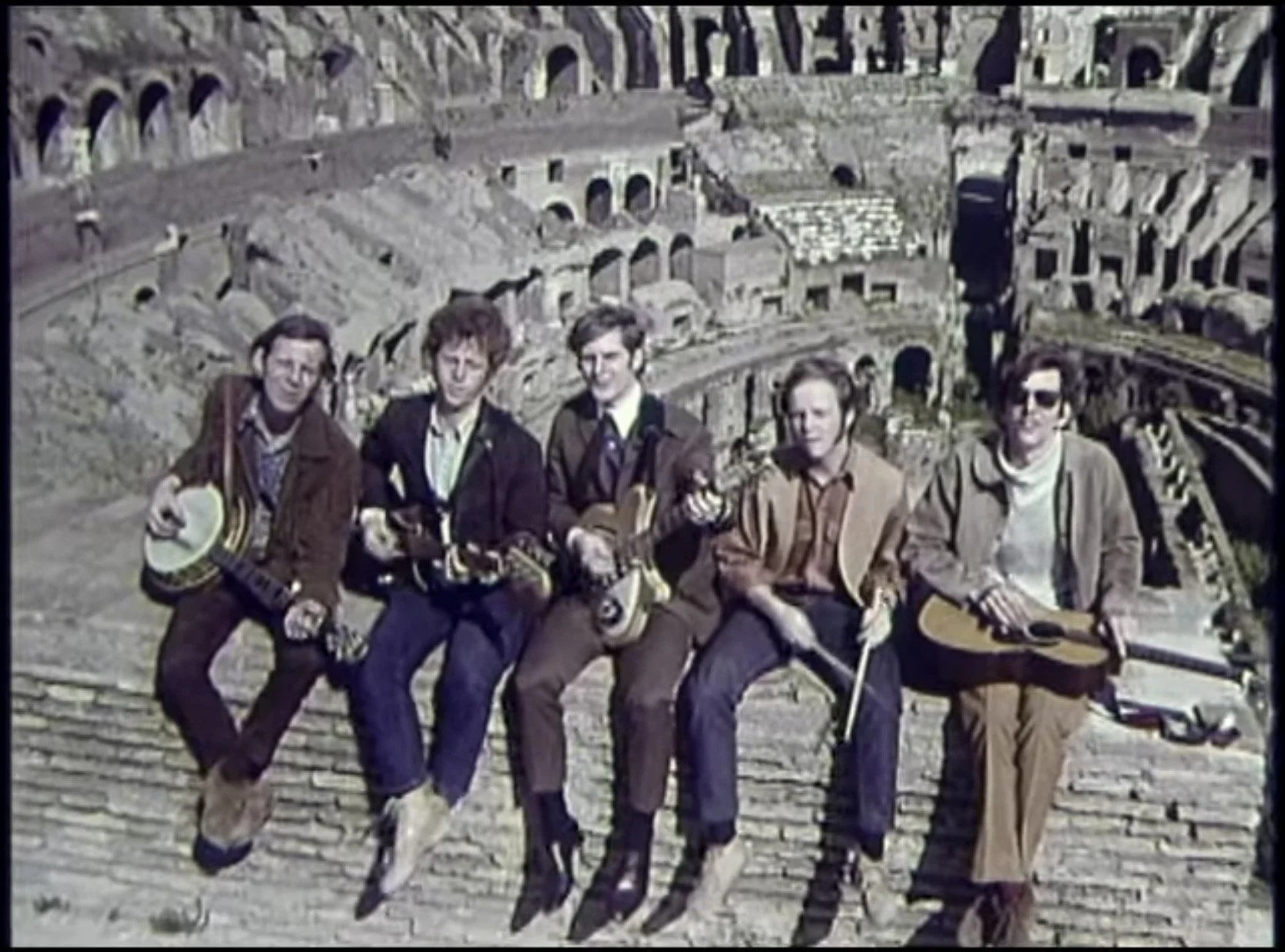
I found on Youtube a recently re-discovered piece of 58 year old colour film in which The Byrds mime to ‘Hey Mr Spaceman’ whilst standing in the Colosseum. Finding out how and why this happened has taken some digging. 1968 was a turbulent year for politics and popular culture. Often considered the comedown from the pop revolution and the LSD fuelled summer of 1967. 1968 saw a street riots in Paris, assassinations of Martin Luther King and Robert Kennedy, crushing of the Prague Spring at the height of the cold war and the My Lai massacre in Vietnam.
With their popularity in decline after the highs of ‘British Invasion’ inspired electric folk and dalliances with psychedelia, the Byrds had lost original member Michael Clarke and had sacked the mercurial David Crosby. They recruited banjo player Doug Dillard, Drummer Kevin Kelly and a 21 year old Harvard dropout with a trust fund which facilitated his enormous appetite for non-prescription medication. History credits the late Gram Parsons (for it was he) with the invention of ‘Country Rock’ (so but for him folks, the Eagles might never have been!). This short lived lineup travelled to Italy in May 1968 before subsequent trips to England and a tour of South Africa. The Italian stopover took in an appearance at the ‘First International European Pop Festival’ which started in the 20,000 capacity Palazzo della Sport and ended in the much smaller Piper Club. In true 1968 style the event was chaotic, poorly organised and attended, and a number of the ‘invited’ acts never accepted (The Who, The Doors, James Brown, The Grateful Dead etc. etc.). The shift in venue followed a police raid after members of The Move set off a smoke bomb. The acts who did turn up included Donovan, Captain Beefheart and his Magic Band, The Nice, Brian Augur and the Trinity and Pink Floyd. The film was shot for a BBC documentary which never aired - Video of Julie Driscoll, Brian Auger and the Trinity at the top of the page.
The Byrds’ clothing reflects their transitional state, Dillard in fringed buckskin with a banjo, Parsons in jeans leather coat and polo neck, Hillman in corduroy and growing an afro and Roger McGuinn still in his sixties suit and tie. The song choice is also curious - a minor hit released two years earlier.
After arriving in England in July, the band went on to South Africa without Parsons who ended his four month stint as a Byrd there and then. The explanation for this varies between him being horrified to learn about apartheid and refusing to play to segregated audiences, or just preferring to stay in London and guzzle drugs with his new bestie Keith Richards, before inventing the aforementioned Country Rock. The film is a fascinating snapshot.
John Hiseman
Although I can find no evidence of him ever visiting or playing there (Unless you know differently?) Jazz/Prog Rock drummer Jon Hiseman named his band Colosseum and released albums entitled ‘Those Who Are About to Die Salute You’, ‘Bread and Circuses’ and ‘The Ides of March’ so you can tell where he was coming from. He was very good - so good in fact that he took over from Ginger Baker in The Graham Bond Organisation (Wikipedia will explain all this)
I The Colosseum of Rome - The Flavian Amphitheatre.
What3words - spelling.roofs.hips
Visited April 1973
Status – Top Grade
Capacity - 100,000
Date - 72AD