LIII Modena (Mutina)
What3words – gadget.pouting.arrived
Construction - Unknown
Capacity - Unknown
Visited March 2026
Status – An invisible fossil outlined in the street pattern.
Fresh mountain air from the Dolomites follows the southbound traveller towards the City of Modena, bounded by the two rivers Secchia nd Panaro, affluents of the Po. Home of the Italian supercar and birthplace of Enzo Ferrrari and the Maestro Luciano Pavarotti. The city contains two world heritage sites reflecting its medieval splendour, and buildings and streets which lie above Roman remains largely lost from view.
A Roman settlement was in existence in the 3rd Century BC and was besieged during Hannibal’s invasion of Italy. It may thereafter have been abandoned until the founding of ‘Mutina’ in 183BC. It was important enough to be besieged twice in the 1st Century BC - in 78BC by Pompey when it was defended unsuccessfully by Marcus Junius Brutus (no not ‘that Brutus’ but his dad). It was under siege again, this time by Mark Anthony in 44BC during the civil war which followed the assassination of Ceasar, and defended this time by Decimus Junius Brutus (the brother this time). It lived on as a city of regional importance until the fall of the empire and was buried and abandoned following a great flood in the 7th Century which probably put most Roman remains under several metres of silt. Restoration and the building of a new city began in the 9th century and gained pace in the 13th century when it became the focal point of the Duchy of Modena. Those world heritage sites are centred around the Piazza Grande and the 11th Century Cathedral. The latter, we are told, built largely from repurposed Roman materials.
Evidence for the existence of an amphitheatre in Modena is found in Martial’s Epigrams (III,59) where he appears to sneer at the practice of pleb tradesmen sponsoring gladiatorial games:
“LIX. ON A COBBLER AND A DYER.
A paltry cobbler, O elegant Bononia, has exhibited to you a show of gladiators; a dyer has done the same to Mutina, Now where will the innkeeper exhibit?”
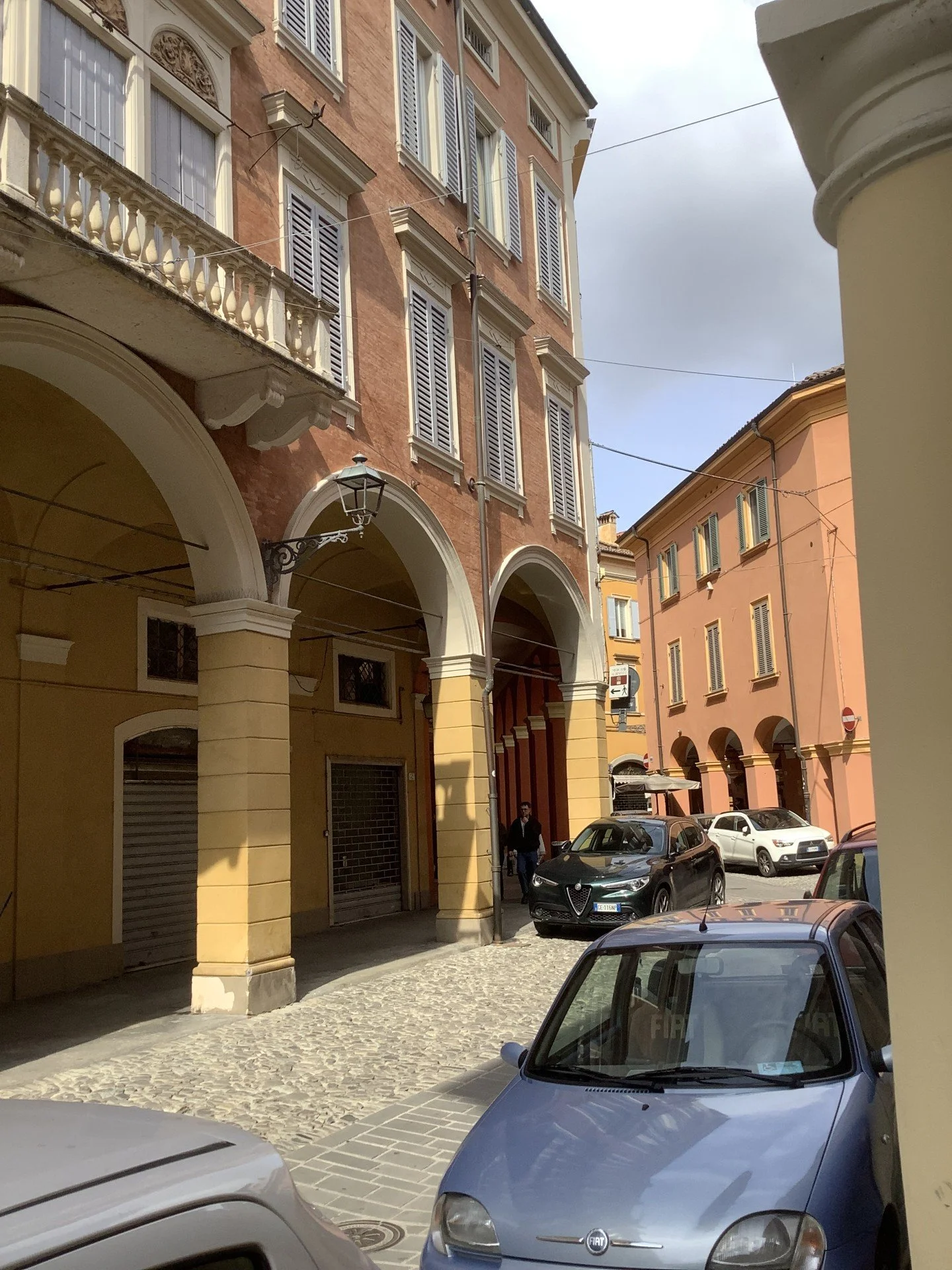
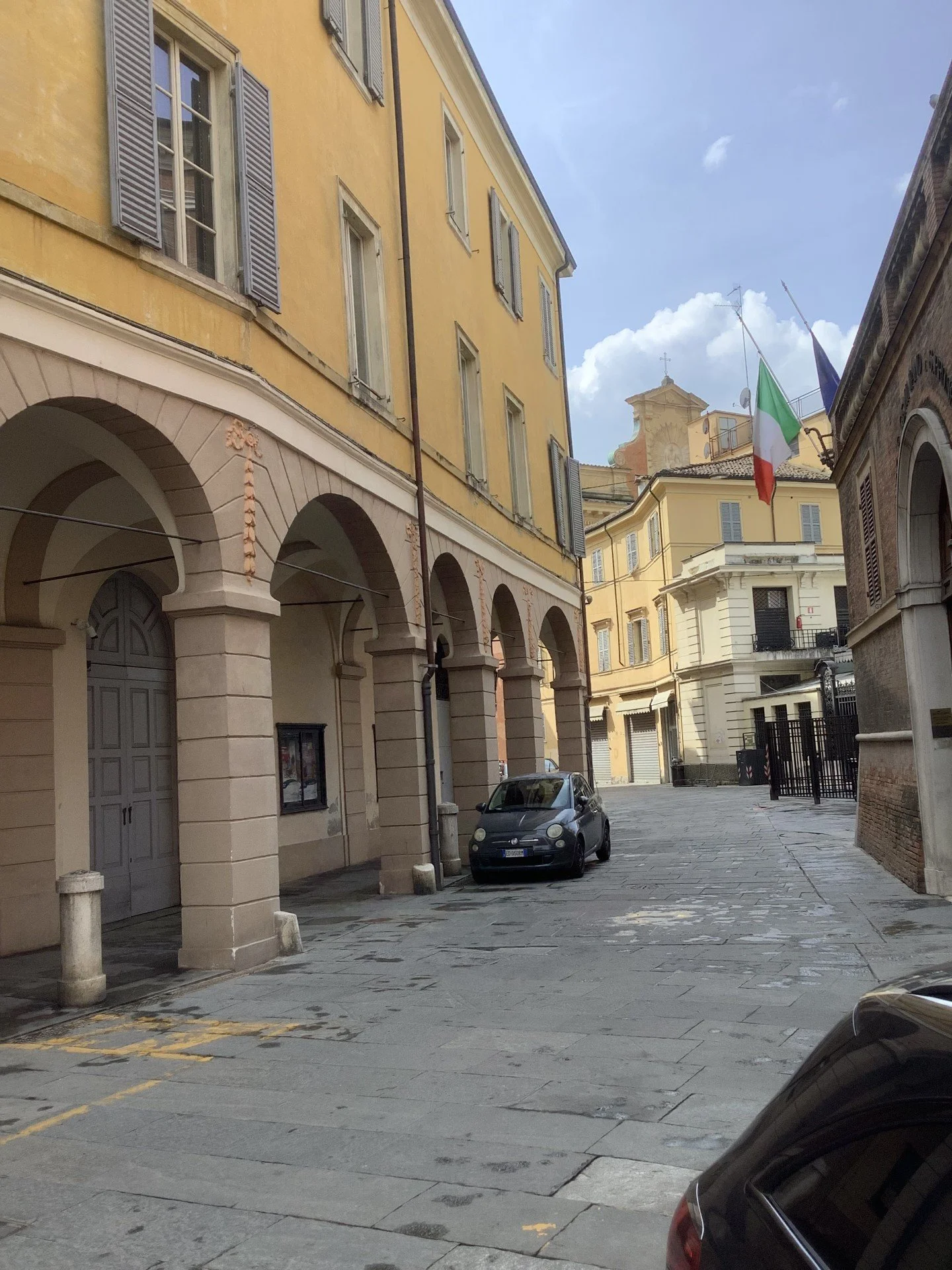
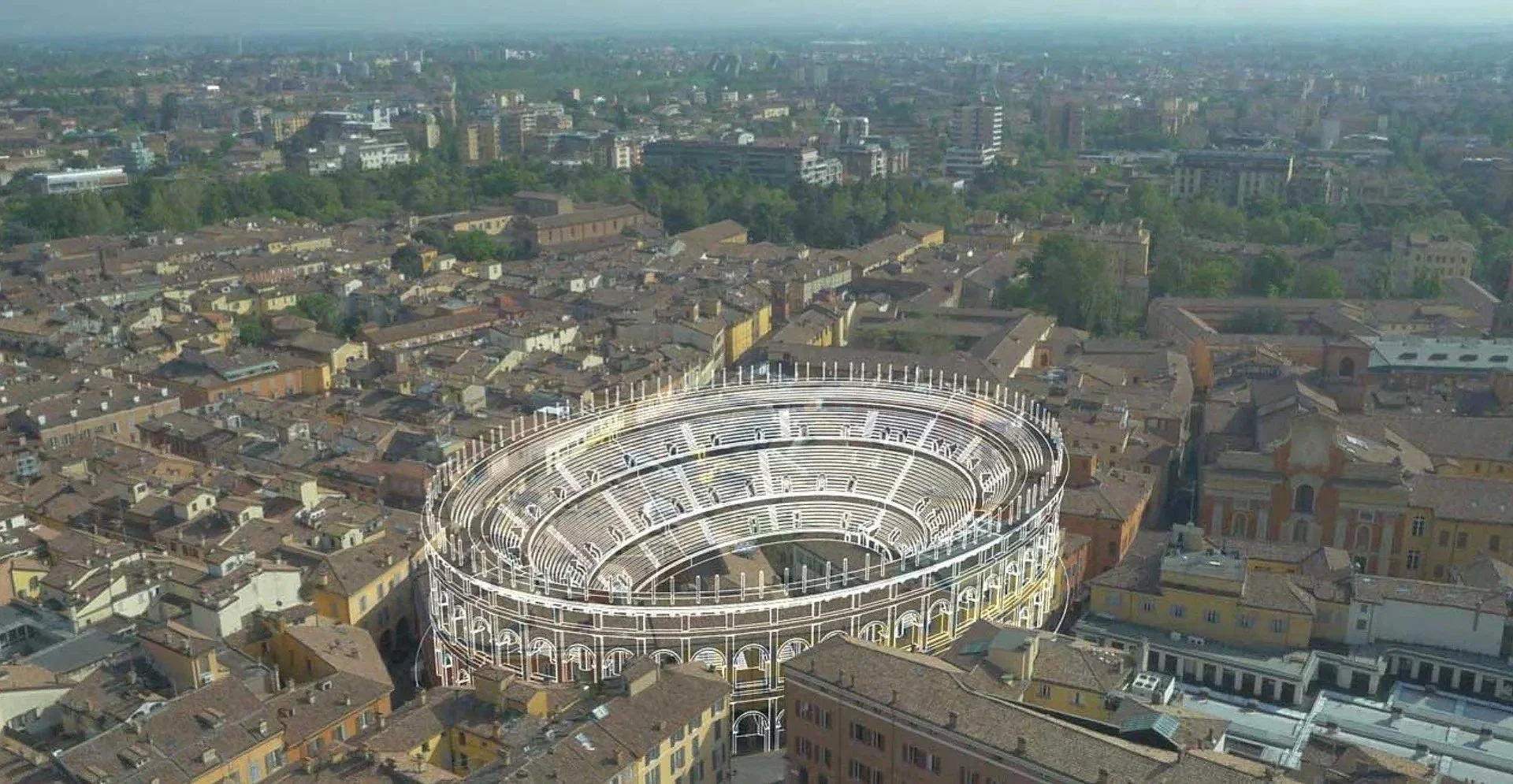
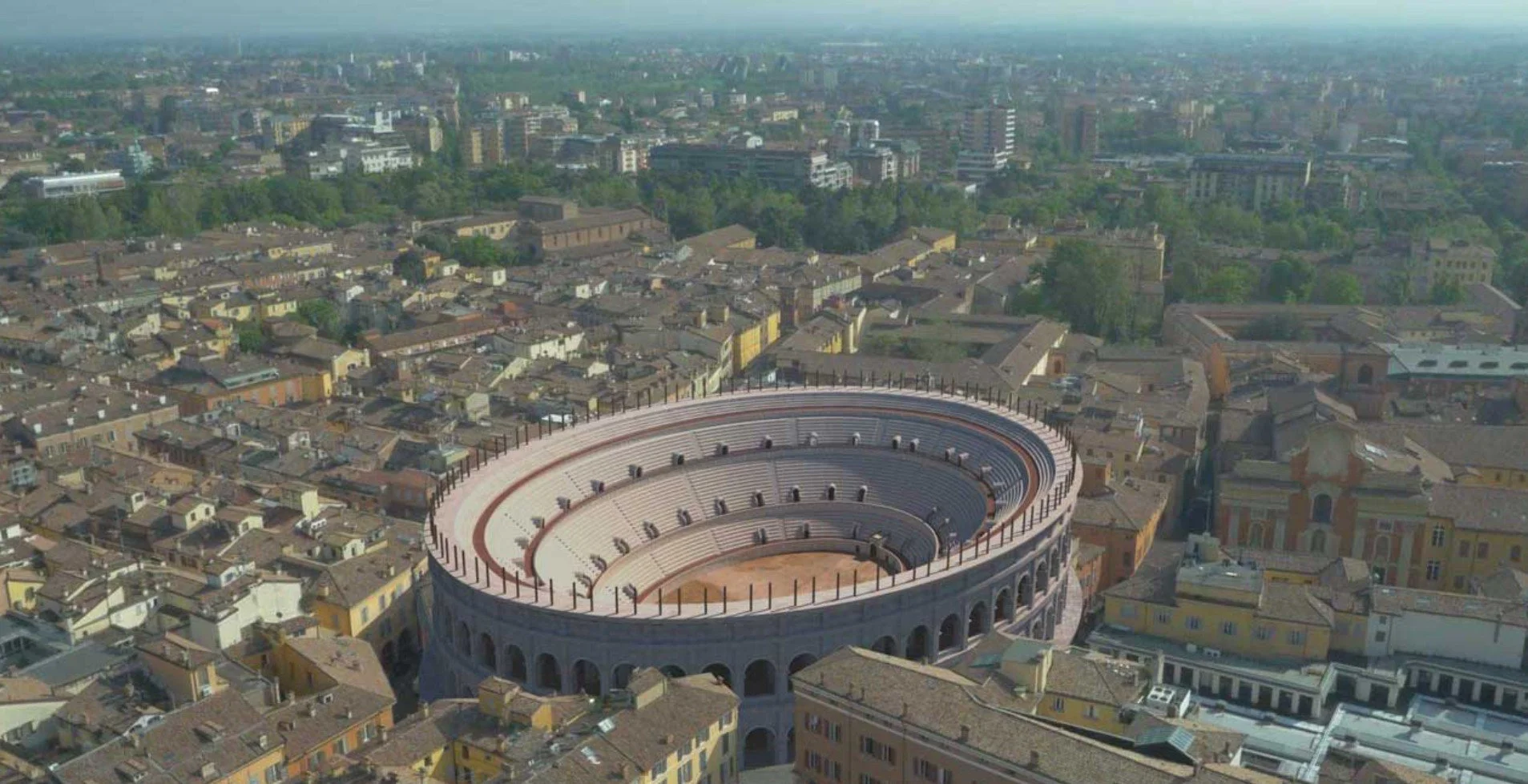
At the southern extreme of the grid of (now pedestrianised) streets of the old city centre, Via Mondatora and Via Canalino describe uncharacteristic opposing curves which suggest the buildings are founded on something of a similar shape. Drilling in the courtyard areas and basements of modern buildings has revealed the presence of masses of brickwork proceeding from the streets to the inside of the buildings. This this has been interpreted as evidence of buried stepped structures corresponding to the cavea of an amphitheatre. In addition, records of the 1883 excavation of a well in Via S. Geminiano refer to the discovery of a substantial wall of ‘sesquipedal bricks’ at a depth of 6m together with architectural fragments of stone and marble in the location corresponding to the southernmost extent of the suggested amphitheatre.
The findings of a project ‘Mutina: Rediscovery of a Roman City’ can be found on the website http://www.mutinaromana.it/ this pulls together archaeological and historical evidence and features a three dimensional model/tour of the city including a visualisation of an amphitheatre fitted into the space between the curved streets.
For now the cellars and foundations of the Vias Mondatora and Canalino keep their secrets.
On a quiet Sunday in March there was not a Ferrari in sight. The only evidence of supercar aspirations was a parked monumentally ugly 4×4 finished in ‘exorcist green’ and badged as a Lamborghini - poor effort!