LV Luni (Luna)
What3words – curl.stepping.seated
Construction - 2nd Century AD
Capacity - 7000
Visited March 2026
Status – The Amphitheatre of a port (now landlocked). Centre for export of Carrera marble.
Luna was established in 177 BC and is near the town of Luni Mare in the province of La Spezia. After the Battle of Actium in 31 BC, which secured the supremacy of Gaius Octavius in the Roman Empire, retired soldiers were sent to the region of Luna as veterans and colonists. During the subsequent reign of his son as Emperor Augustus (31 BC to 14 AD), Luna was developed as a thriving port to transport Marble to Rome and beyond. In the second century, under the Antonine emperors, the amphitheatre was built south of the city gates. The nearby marble quarries of Carrara gave the city great economic importance.
However good your roads, two centuries ago transporting blocks of stone by sea was infinitely more efficient than in carts drawn by animals. Carrera marble was in high demand to decorate Roman monuments and provide material for many thousands of statues. The town survived into the middle ages as a Bishop’s seat, defended from post empire invaders by fortified walls. The harbour finally silted up and the settlement on the Roman site, surrounded by marshes alive with malarial mosquitoes, was finally abandoned in the 11th century. The remains now stand 2km inland, separated from the sea by cultivated drained farmland. The Autostrada which bypasses Luni en route from La Spezia to Pisa is flanked at intervals by yards filled with pristine white marble blocks where gantry cranes load them onto trucks ready for shipping to the bathrooms of Dubai and the worktops of Ascot. The Romans had to do it with horses, oxen, slaves. wooden carts and sailing ships.
The arena lies about 250 metres from the city gate on the Via Aurelia Nova. It is 88.5 metres long and 70.2 metres wide and had a capacity of about 7,000. After the end of the Western Roman Empire in the 5th century, the complex was used as a quarry but this largely stopped once the site was abandoned. At first sight it looks as if the ground level within the arena is a couple of metres higher than its original level because the lower slopes of the supporting structure for the front of the seating appear to be level with it. However the amphitheatre, although without underground vaults, had a moat separating the audience at the front from the action.
The site of Luna had few visitors on a Monday in March 2026 (two including me) which is a pity because the statues and exhibits in the newly refurbished medieval farm buildings which house the museum are well worth the €5 entry fee. The Amphitheatre lies outside the main site and is only open on Thursdays-Sundays. If more people read this website and seek it out, maybe supply will be increased to meet demand. For the time being it sits quietly in a maize field surrounded by security fencing and guarded by a dreary unmanned portacabin. It’s easy enough to see over the fence, especially when standing on a wheelie bin (health and safety warnings etc…..)
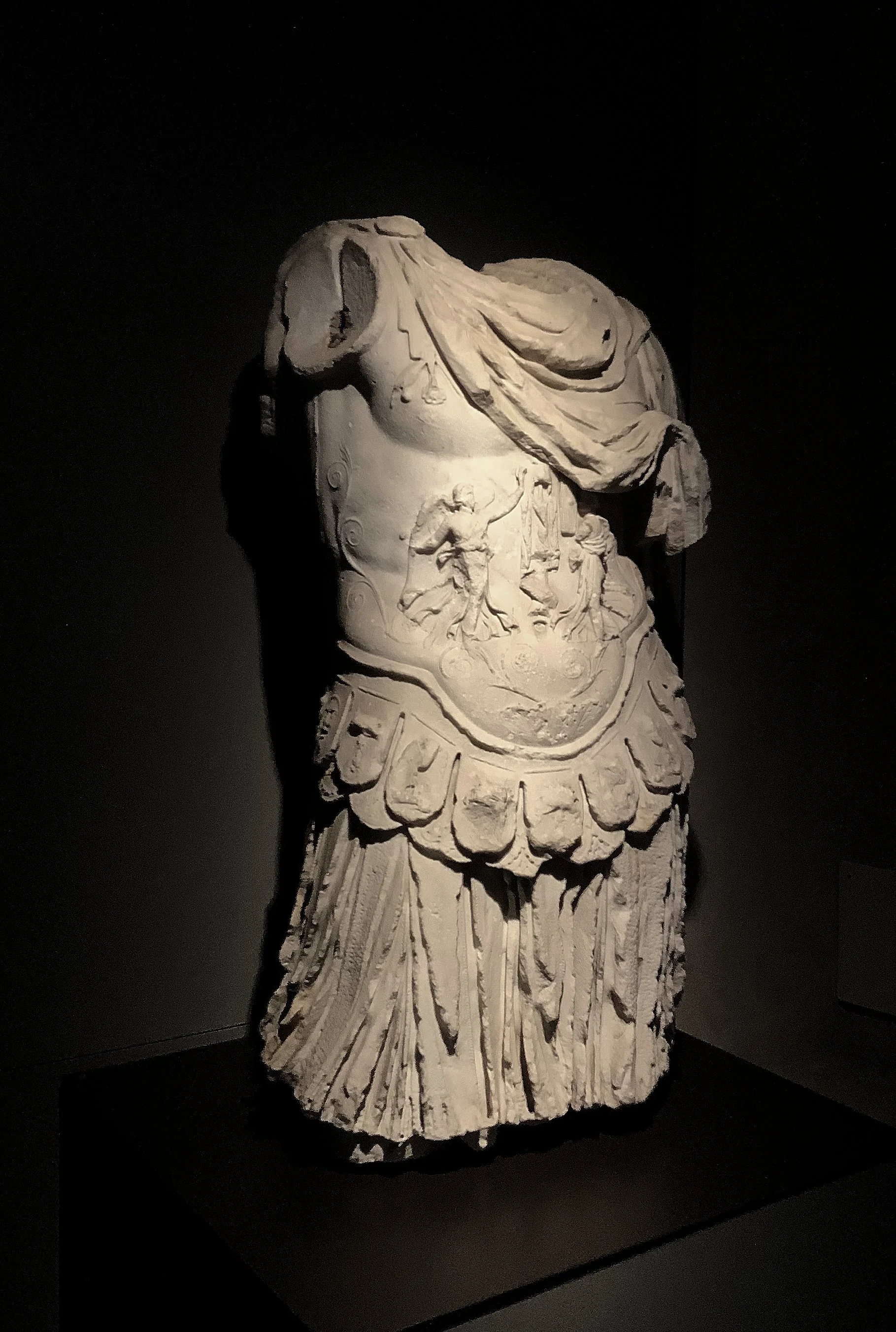
Marble from Carrera - Museum of Luna
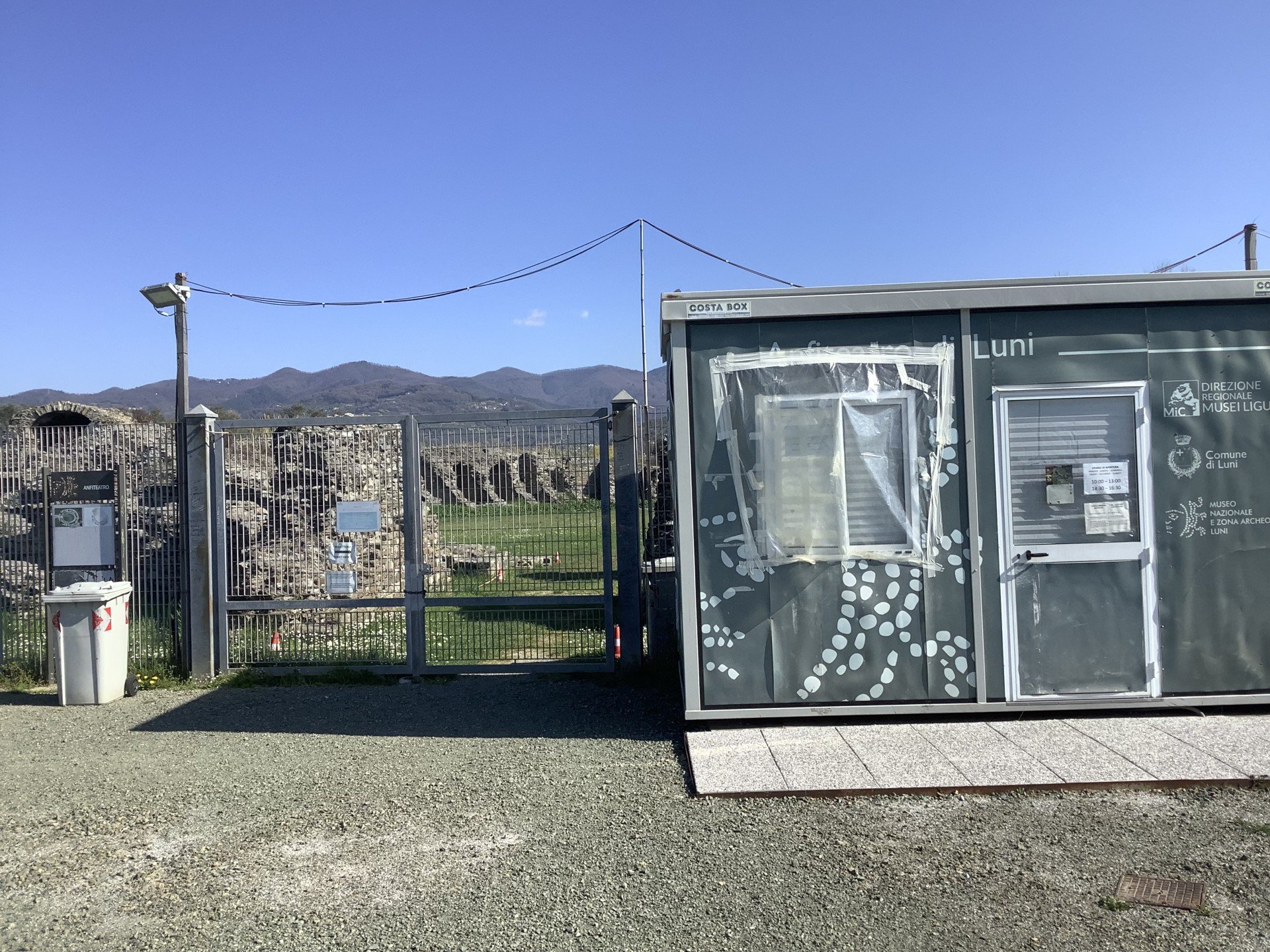
Welcome to the Arena of Luna (not!)
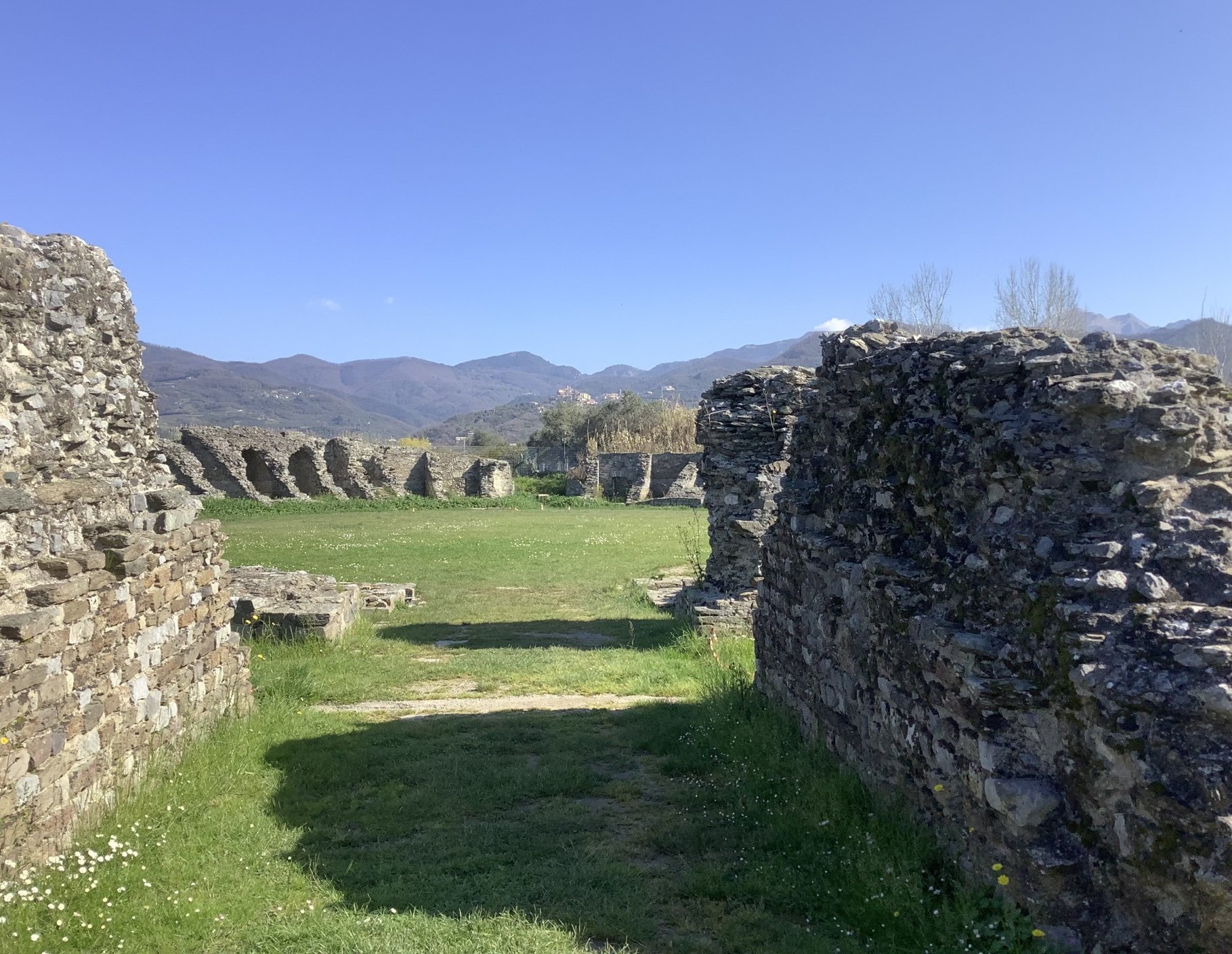
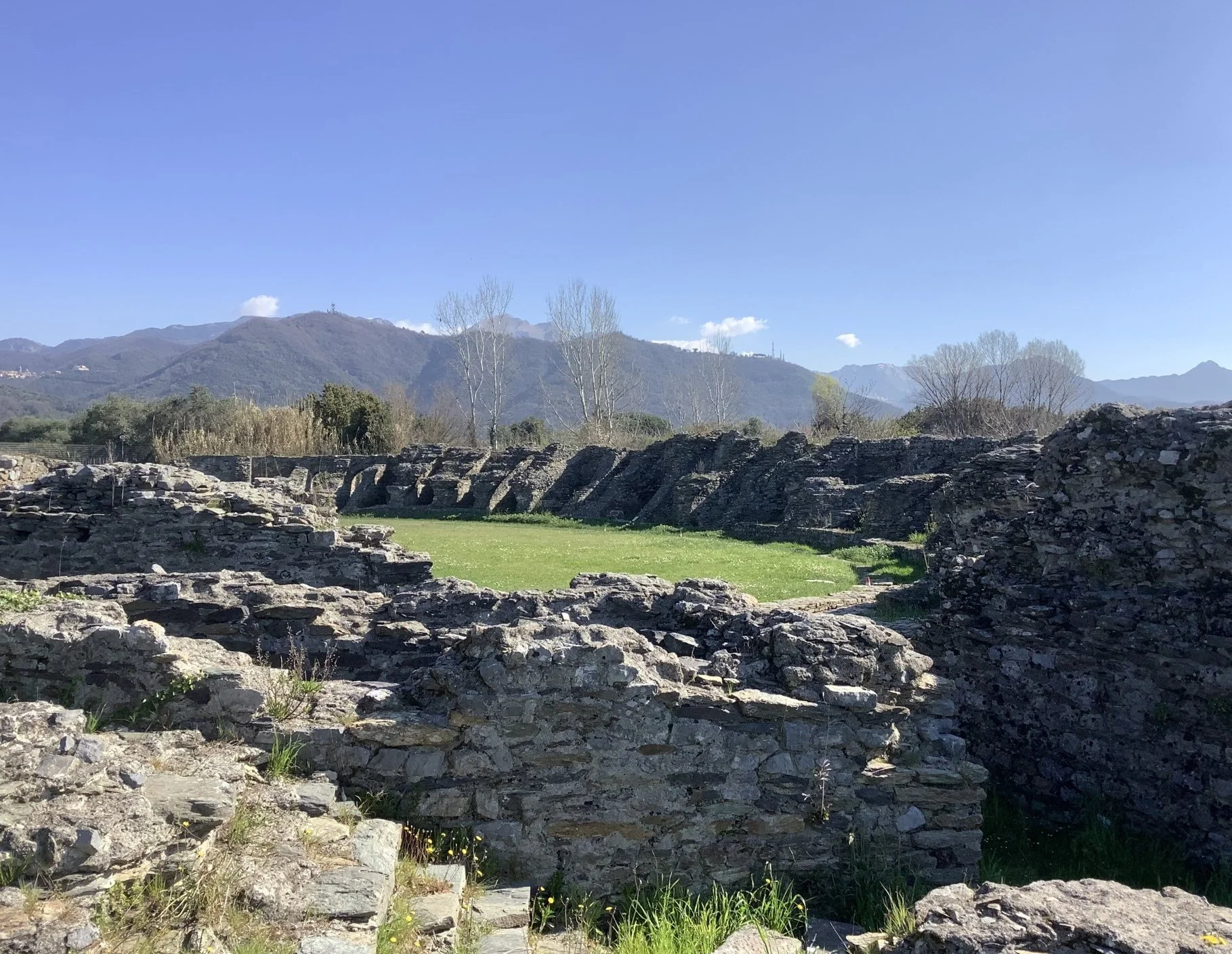
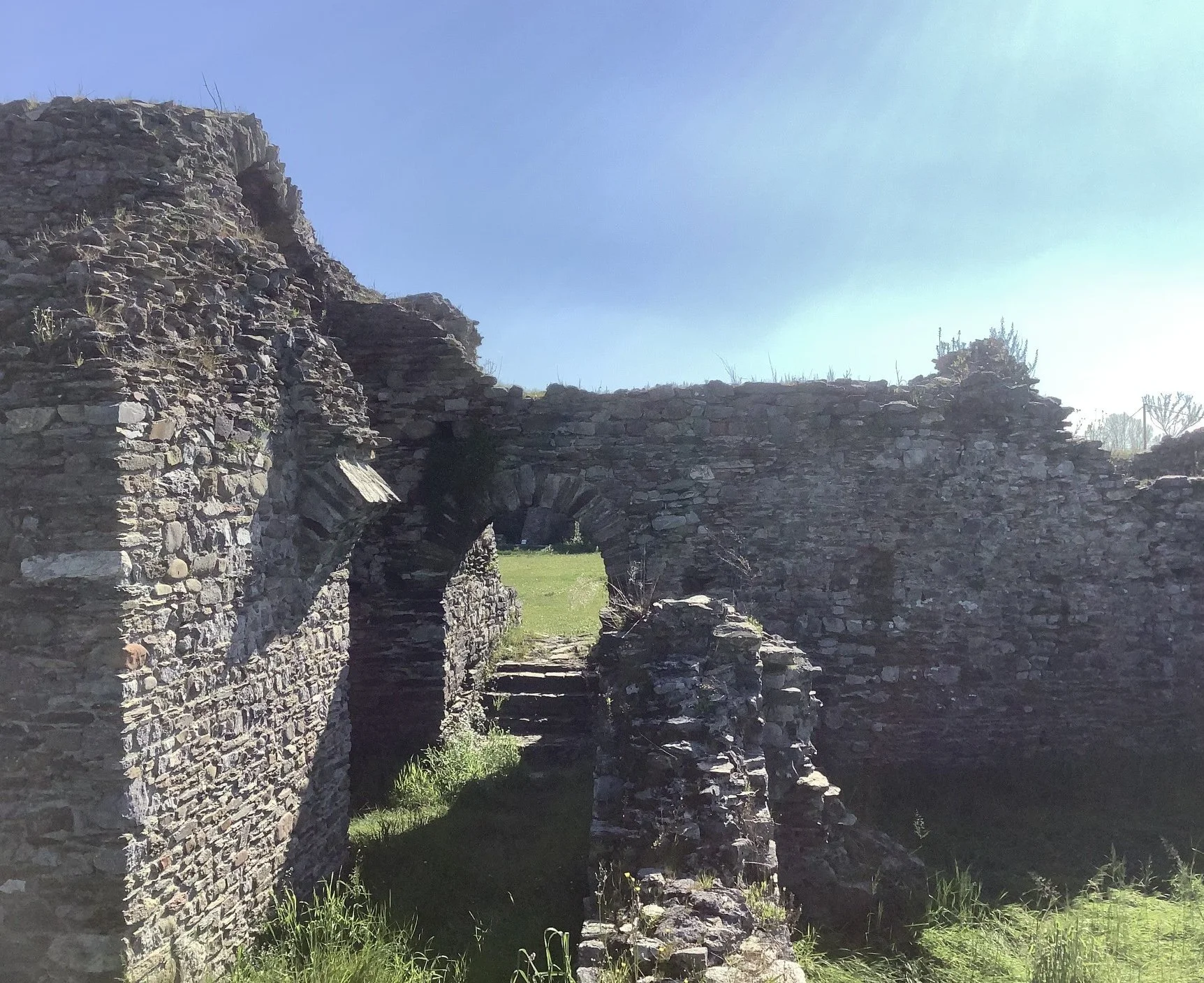
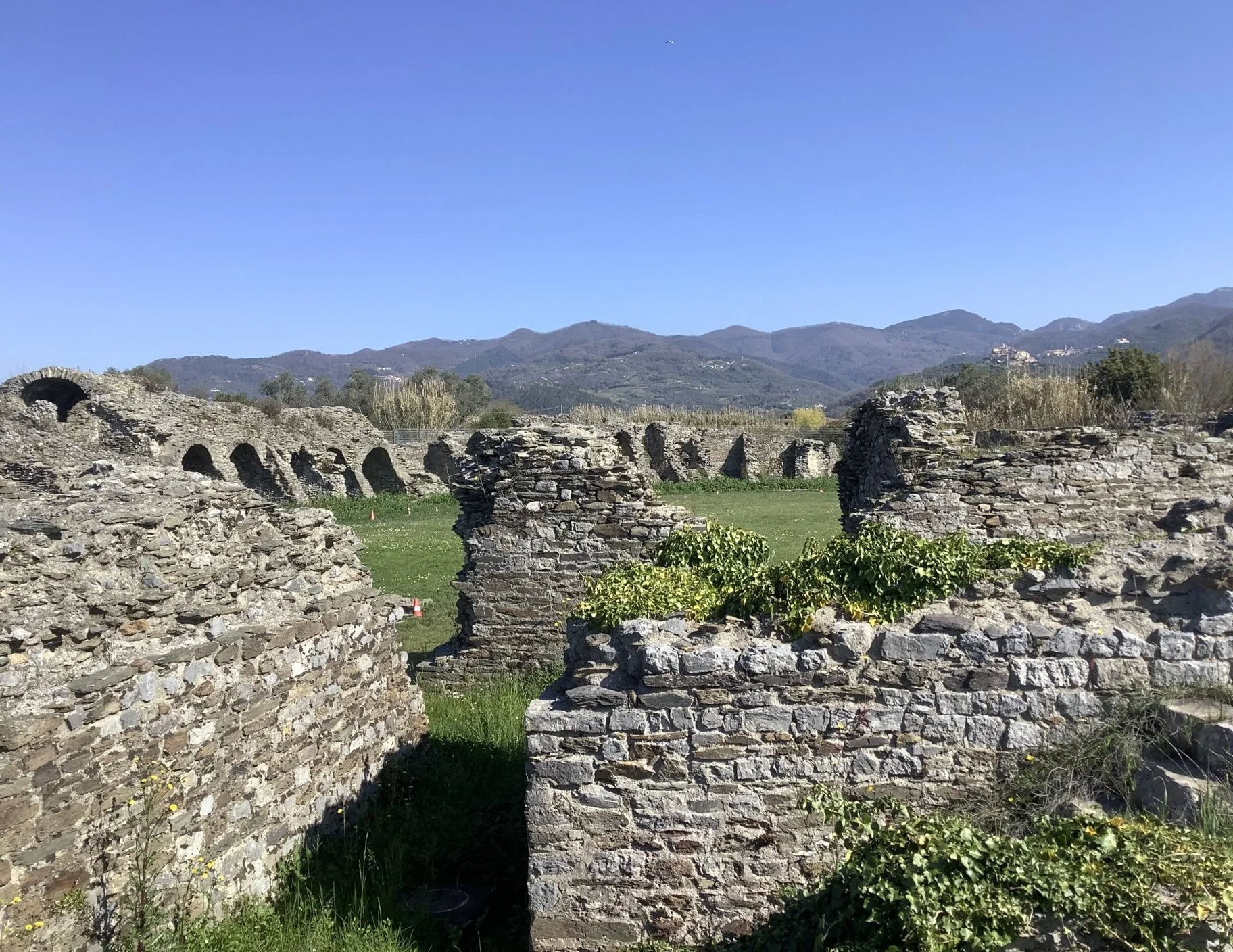
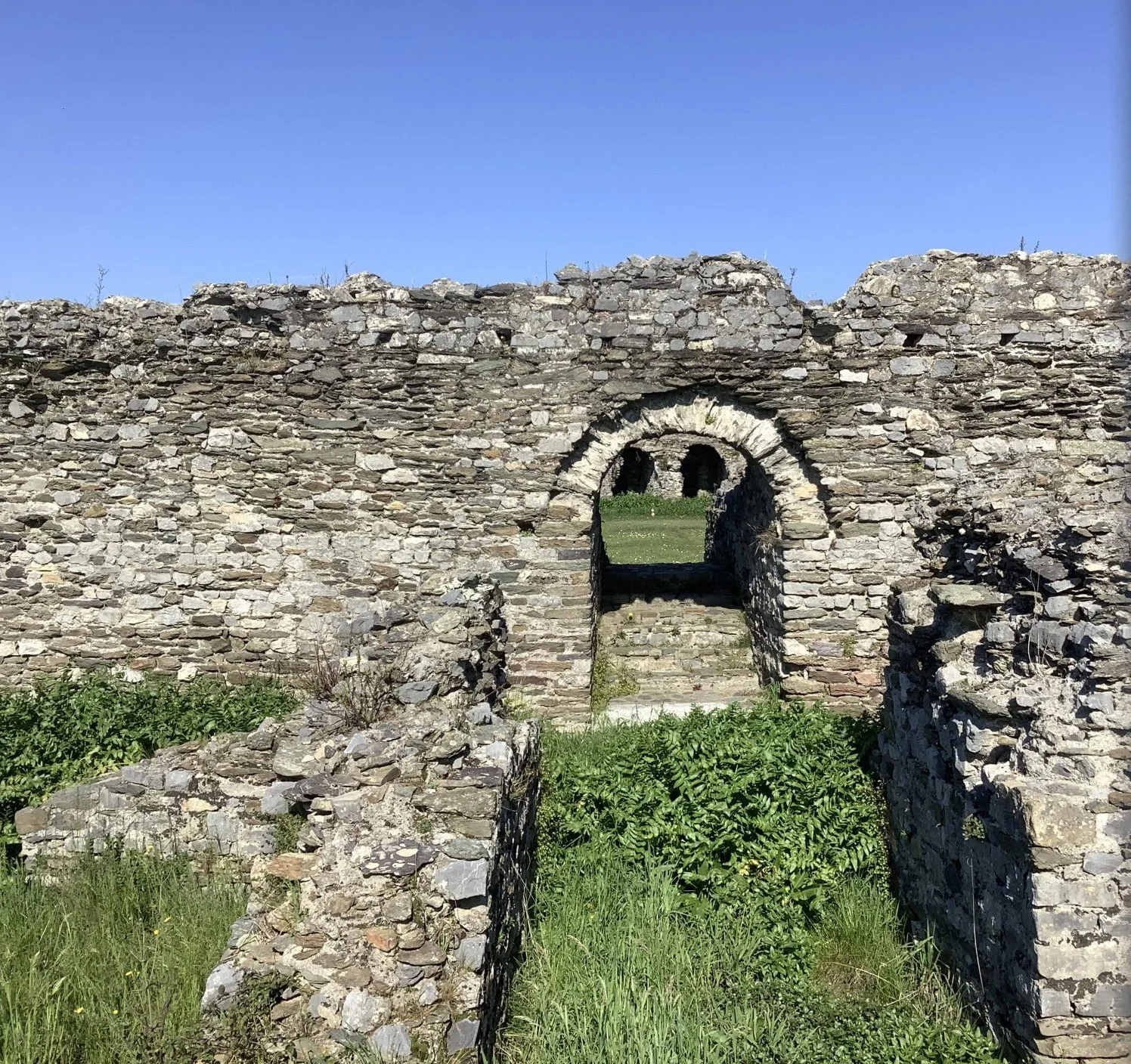
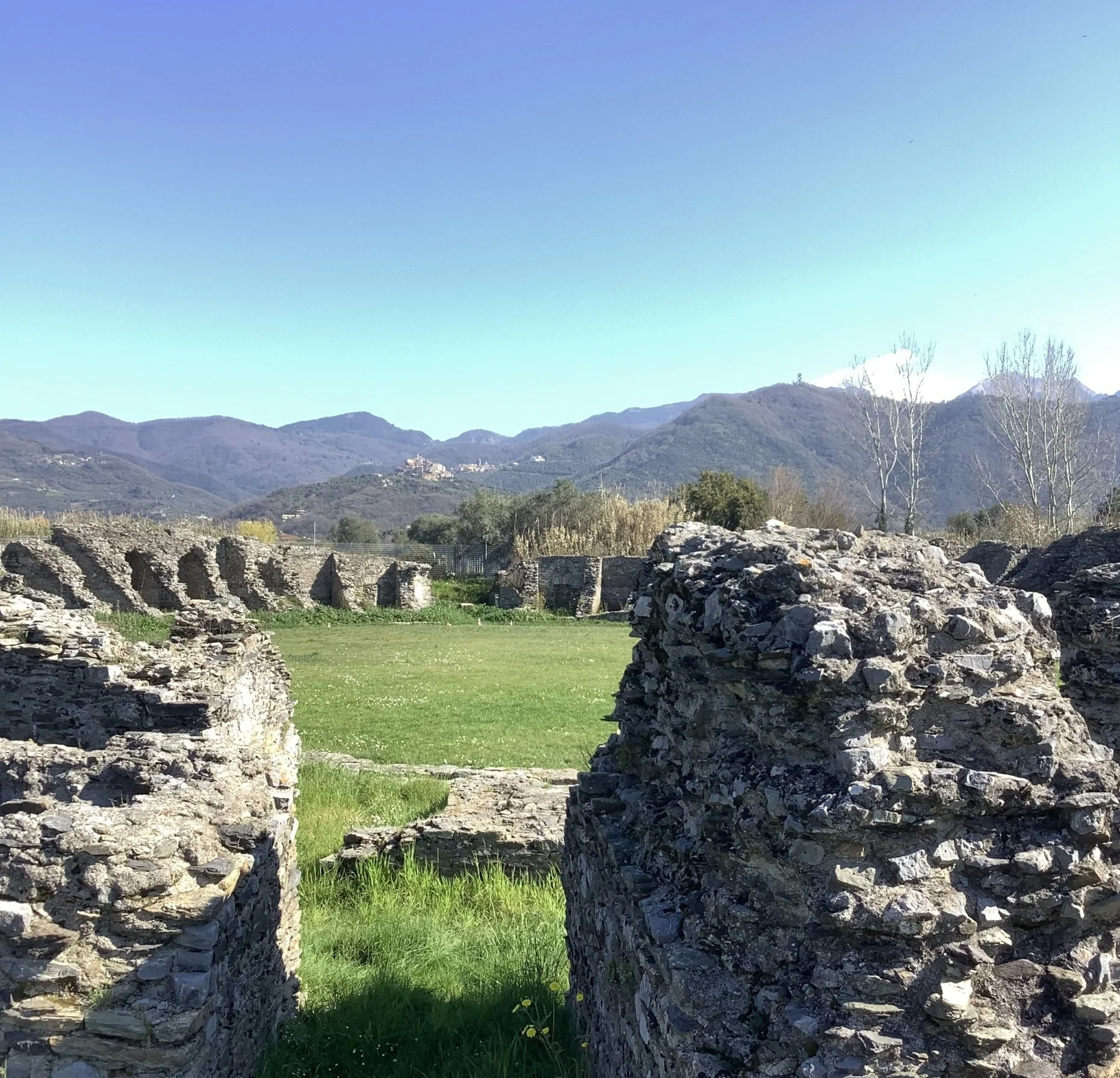
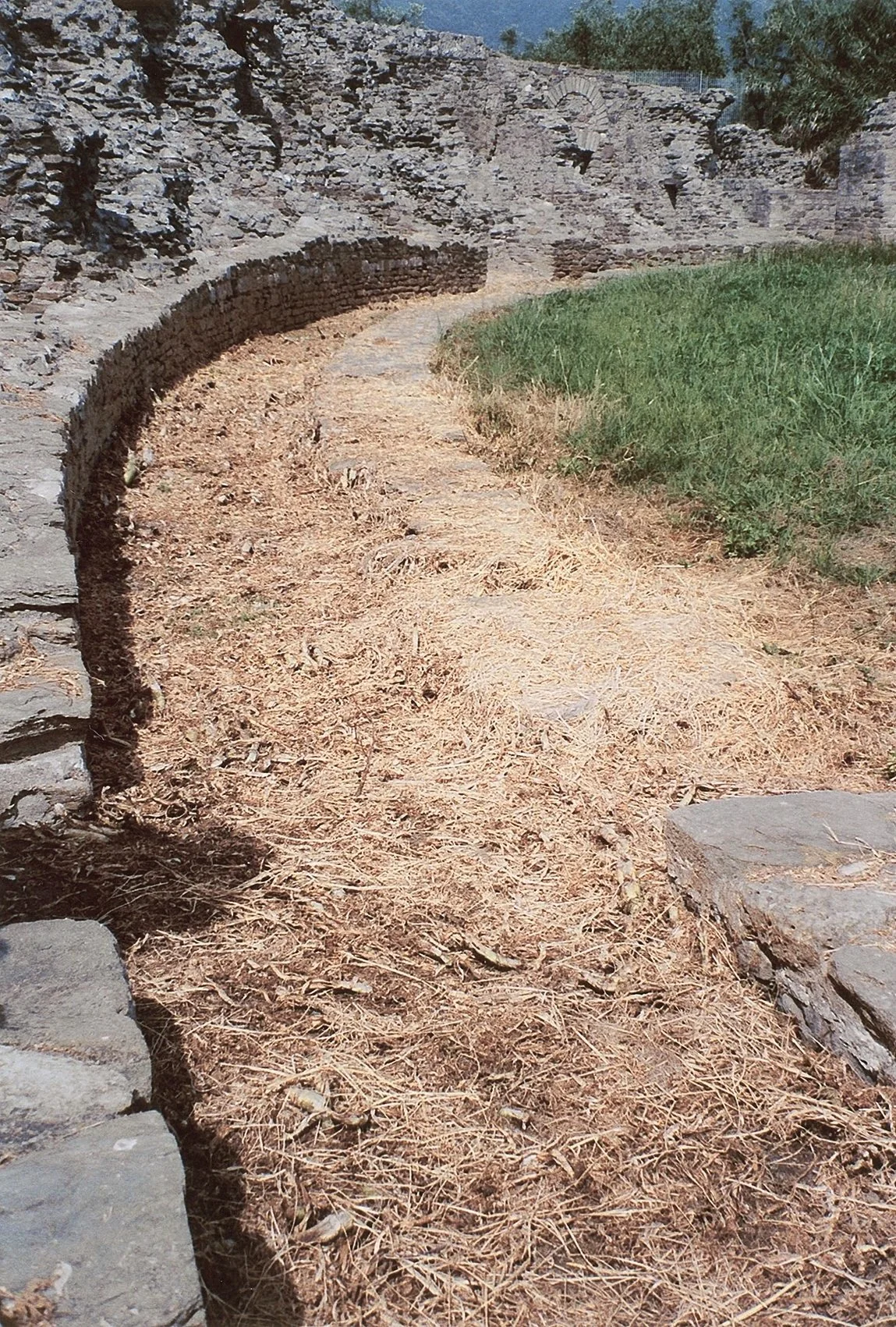
The Moated Arena
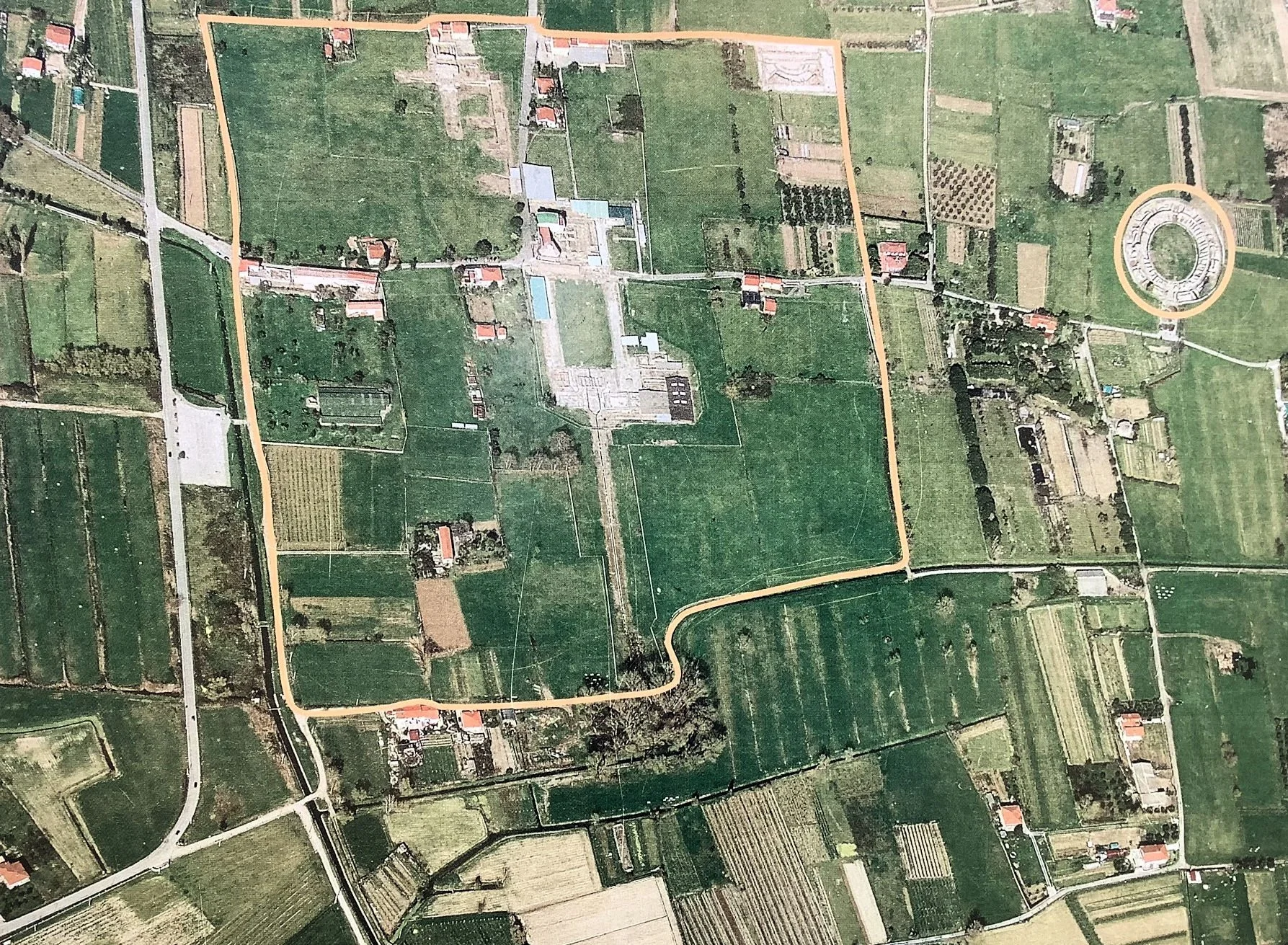
Site of the walled city with the Amphitheatre to the south.
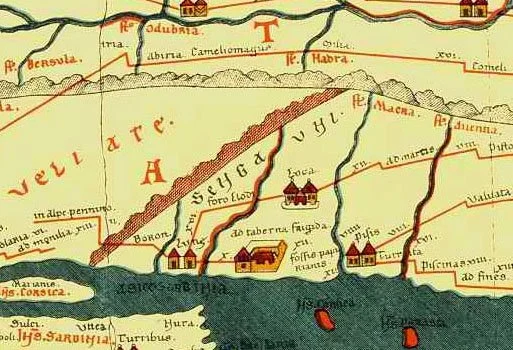
Luna and Lucca as they appear on the ‘Tabula Peutingeriana’ 12th Century copy of a Roman Map